Structure of the comic
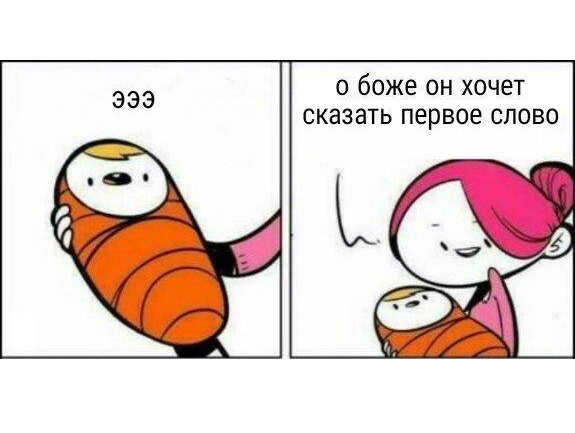
Two panels are divided by a vertical line. On the left, a round-headed character holds an orange bundle that looks like a cocoon and watches with a neutral expression. Above it is the text “uhhh.” On the right, a pink figure with hair tied in a bun leans toward the baby, smiling, and above is written “oh my god he's going to say his first word.” The contrast between the two panels creates the main dynamic: first emptiness and bewilderment, then anticipation that the viewer starts to share. The baby's face is barely drawn, which leaves room for the viewer to fill in the rest.
Origin
The original English caption reads “OMG His first word.” The artist, the first post, and the date of appearance are unknown. The Russian version of the text appears to be a translation or adaptation, but who made it is not established. The meme is dated to 2016, but that does not confirm the template's first appearance. All that is known is that the drawing exists in a Russian-language version and with an English caption.
Why the anticipation works
The comic draws on a familiar scene: parents waiting for a child's first words, where every movement seems significant. The meme uses this situation but, instead of a touching finale, creates a pause. The pause matters more here than the line itself, because it makes the viewer complete the scene. The joke lands on the contrast between two reactions. The mom reads the moment as an event, while the first panel shows that the baby hasn't promised anything. The stronger the anticipation, the funnier any unexpected result becomes. The viewer already knows how the story will end, and that is exactly why the ending feels awkward.
The Russian caption and its effect
The phrase “he's going to say” creates the expectation of speech, even though the baby in the drawing says nothing. The word “uhhh” in the first panel sounds like a delay or a question and prepares the reader for awkwardness. The translation keeps the conversational tone, so the caption is easy to read and recognizable to anyone who has spent time around small children or has found themselves in the parents' position. The light imitation of children's speech makes the joke warm rather than mean, which matters for its overall mood. For Russian-speaking readers, this means the joke does not require knowing English, because its core mechanism, the intonation and the pause, carries over into the translation without noticeable loss.
Example captions
The template is easy to adapt to everyday situations:
- “The boss opened his mouth: ‘Colleagues, important news.’ Uhhh.”
- “The chat went quiet, everyone is waiting for a decision. Then one line arrives: ‘ok.’”
Both examples use the same device: a long pause, strong anticipation, and a short, too-ordinary outcome.
Where it is used
The comic fits situations where the anticipation outweighs the result: long approvals, premieres, promised updates, and meetings that were supposed to settle everything. It is important not to apply the template to real children in a humiliating context. The meme targets adults' expectations, not the child, which is why it should be used carefully. The template also works for conversations about any long wait where the outcome disappoints the anticipation, and this explains its staying power.