What the picture shows
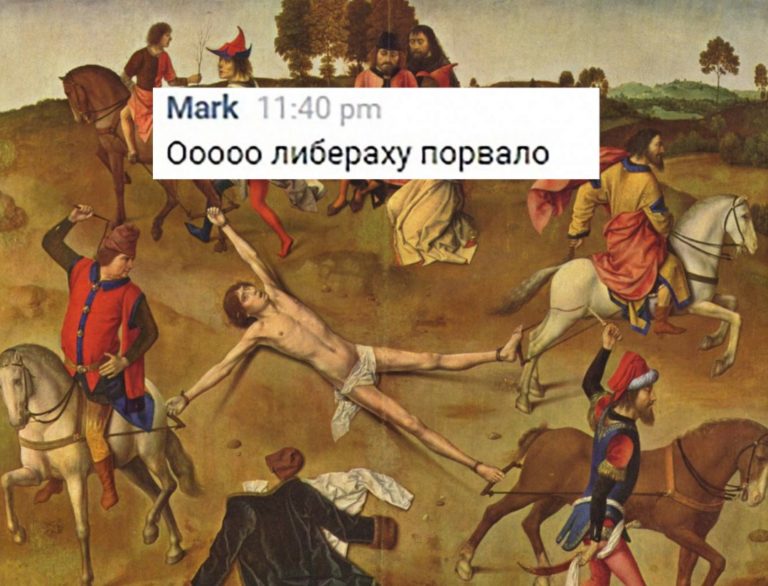
The base is a fragment of an old canvas with a multi-figure scene. At its center is a nude figure being pulled in different directions by ropes tied to the arms and legs, surrounded by horsemen and a retinue in historical costumes. Over the painted scene is laid a screenshot of a chat with the sender's name, 'Mark,' a timestamp, and a short reply: 'Oooooh, liberakhu just lost it.'
The clothing style, horse harnesses and overall composition point to European painting of the late Middle Ages or early Renaissance, where such crowded scenes of execution or torture often illustrated religious subjects and were painted with detailed depictions of dozens of figures on a single canvas.
A classical painting device in modern memes
Pairing an old painting with a dramatic, sometimes agonizing scene and a modern short line from a messenger is a common technique in recent years. The contrast between lofty artistic language and a deliberately lowered, everyday phrase creates a comic effect on its own, even before the viewer gets into the meaning of the caption.
This genre is sometimes called 'classical art with a caption.' It allows quick, recognizable delivery of irony or the absurdity of a situation, using the aesthetic seriousness of painting as a contrasting backdrop for a conversational, sometimes crude remark.
The meaning of 'Liberakhu just lost it'
The wording itself is built on the colloquial 'porvalo' (literally 'tore it'), meaning 'provoked a wild, uncontrolled reaction,' and on the derogatory suffix in 'liberakhu,' which turns a neutral political self-identification into a mocking nickname. The visual metaphor of a figure stretched in all directions in the painting literally illustrates this state: a person being 'torn apart' by outrage.
The drawn-out 'Oooooh' at the start of the phrase imitates the intonation of spoken mockery, the manner in which the chat's interlocutor supposedly reacts to someone else's stormy outburst with barely concealed gloating and superiority.
How it is used
The phrase and picture are used in politicized arguments on social media and forums as a go-to reply to an opponent with liberal views. Instead of a detailed argument, a user posts a ready-made meme, signaling that they consider the other side's reaction overly emotional and not worth a substantive answer.
This format is especially handy in quick flame wars in comment sections, where a user has neither the desire nor the time to craft an elaborate counterargument. A prepared picture serves as an instant, easily recognizable jab at the opponent.
The origin of the exact attribution
The exact time and author of the first publication of this specific pairing of painting and caption have not been reliably established. The 'classical painting plus modern line' format existed in the Runet before this particular variant appeared, and the phrase itself may have arisen independently in different groups before settling as a recognizable template.
Lack of clear attribution is typical of such format memes. The template is easy to repeat and modify, so it is not possible to trace from open sources which group and on what day the first version with this particular painting appeared.
Typical captions and variations
Besides the original version with 'liberakhu,' similar templates turn up online with the target of the joke swapped: 'the patriot just lost it,' 'the conservative just lost it' and the like. Only the object of mockery changes, while the phrase structure and the visual device with the painting stay the same. This flexibility explains the format's staying power: the same visual framework easily adapts to either side of any political argument, making the meme a universal trolling tool regardless of the author's views.