The comic and its online variations
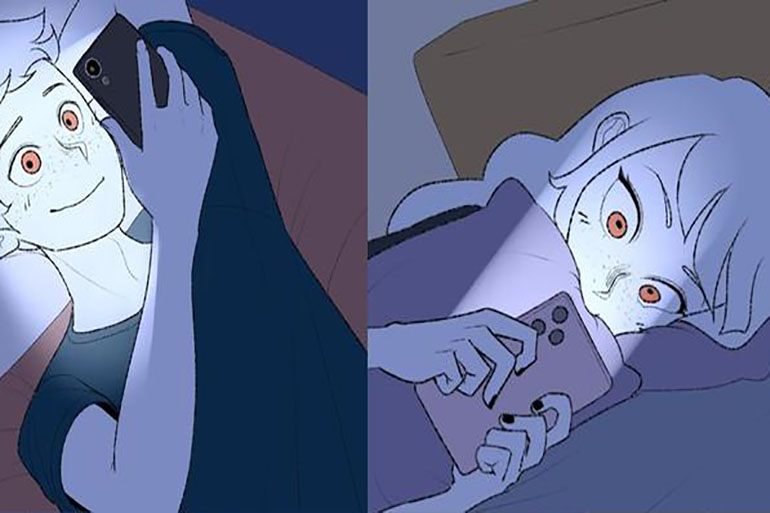
The template is built on a drawing of a couple lying in bed, communicating through their phones. Online archives trace the comic's early publication to Reddit user AlexMaestro in May 2021; other users later added new panels, including a popular variation featuring Shrek. These dates describe the documented publication history rather than a guaranteed absolute beginning: the image may have moved between platforms and survived through reposts.
What matters in the specific picture is the domestic closeness of the characters and the distance created by the screens. Different versions change the faces, captions, and continuation of the story. No single illustration should be taken as a depiction of a real couple or used to draw conclusions about their relationship. It's a comic drawing, not a documentary scene. The current version uses a recognizable texting-while-lying-next-to-each-other situation without revealing the identity of anyone depicted.
Closeness and digital distance
The joke is built on a contrast: the two people are within arm's reach of each other, yet they still type messages. The reasons for this can vary — one doesn't want to wake the other, the conversation has just become a habit, the characters are avoiding a direct admission, or the scene is simply played for absurdity. That's why the meme lets people simultaneously tease the habit of constant phone use and recognize it in themselves.
It doesn't have to mean the couple communicates poorly or that digital connection is harmful. Texting is sometimes more convenient than talking out loud: you can send a link, avoid interrupting, or communicate quietly. The irony kicks in when a text message gets used to answer a question that could just as easily have been asked out loud. The clearer the everyday reason, the sharper the adaptation; a blanket condemnation of smartphones just makes it generic.
Caption variations
"We're lying right next to each other: 'send me the wifi password' — 'look on the fridge'" shows a comically mundane exchange. "She asks if they're ordering dinner, he sends a link to the menu they've both already got open" adds a familiar digital loop. "When you're in the same room deciding who's grabbing the package at the door" turns a simple question into a whole thread of messages.
You can also make a family version: "Sitting at the same table, sending each other photos of the cat sleeping underneath it." Here the phones serve a shared joke rather than a conflict. The image also works for a long-distance couple, as long as the caption clearly turns the closeness into absurdity rather than using it to make claims about someone else's relationship. It's best to avoid hinting at the private messages of actual specific people.
How to adapt the comic
Keep both characters and their devices in frame so the viewer immediately grasps the mechanics of the joke. You can place the text next to each message: one person asks a question, the other answers with an equally obvious line. If you add a third panel, make it reinforce the repetition or subvert the expectation, rather than introducing an unrelated plot. A short punchline beats a long explanation.
In a public post, don't use private screenshots of a real couple, and don't add names to the drawing without consent. If the authorship of a specific version is unknown, don't claim it as your own; you can note that it's a remix of the template without spreading someone else's private correspondence. The meaning rests on the domestic detail — the wifi password, the menu link, the package at the door — not on conclusions about how people actually run their relationships.