Choice drawn as a rescue operation
The comic You Can Only Save One appeared at Roxy Comics in March 2018; the well-known post is dated March 14. The artist Roxy turned an internal decision into a three-panel story. The hero enters a burning house, meets two human figures labeled “sleep” and “video games” instead of faces, and then carries the games out of the building. The everyday struggle for evening time is shown as a situation where only one participant can really be saved.
Within a week, a template for new captions was already spreading on Instagram. Then Spanish-language versions and remakes on Reddit appeared, about studying, memes, and the workings of the feed itself. The figures made it possible to swap in abstract concepts while keeping the rescue plot. The title describes the condition of the choice, but the specific joke depends on whom the hero decides to carry out: future obligations, immediate pleasure, or his own questionable priority.
Only the resolution is left
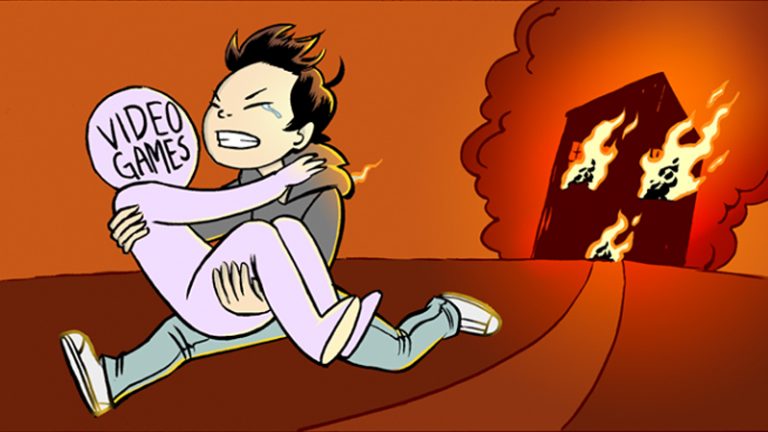
The image shows one final frame. A dark-haired guy runs to the left, holding a light purple figure in his arms. Instead of its face, it reads “Video Games.” Behind him on the right, the house is on fire: flames come out of the windows and rise above the building. Orange and red tones tie the background to the fire, while the hero and the rescued character stand out against it in light clothing.
The initial meeting of the two options is absent here, so the choice of sleep is not shown directly. The caption on the rescued figure already states the outcome: the games have taken physical form and become so precious to the hero that he carries them like a person. The position of the legs and the direction of motion make the decision final. This is not a calm comparison of pros and cons; the character is already acting, and the burning house gives his action urgency and dramatic scale.
What gets saved is what got the time
Personification lets the comic show a priority as a relationship between people. A habit cannot literally be lifted in one’s arms, but the drawing makes it possible. As long as both concepts look the same, their value is determined by the caption and by the rescuer’s action. So the meme shows not the person’s stated intention, but the choice he actually made within the invented situation.
In the usual version, the rescued pleasure is set against a more sensible plan. But the mechanism also allows the reverse: the hero can unexpectedly choose discipline, rest, or one small thing whose importance is clear only to him. The fire amplifies any decision, because it leaves little room for compromise. What is funny is the mismatch between the emergency and the minor fork the caption offers to play out as fateful.
What else can be carried in one’s arms
In a made-up version within the full comic, the panels read “sort through the photos” and “take a hundred more photos.” The hero saves the second option. The joke is not about disliking order in general, but about a precise action: the urge to create new shots again beats the attempt to organize the old ones. The final run makes a small delay look like heroic loyalty to one’s hobby.
Another invented variant sets two activities against each other on a free evening: “finish the episode” and “fix the squeaky cabinet door.” The saved episode turns the familiar postponing of repairs into an emotional choice. In a third example, the hero unexpectedly carries away “the last slice of holiday pie,” leaving behind in the imaginary house “a perfect photo of the dessert.” Here the choice is perfectly understandable, but the urgent rescue pose makes the ordinary decision to eat look exaggeratedly dramatic. The names of the habits have changed, but the composition keeps the main point: one priority is already in the person’s arms, and the other has stopped influencing his movement.