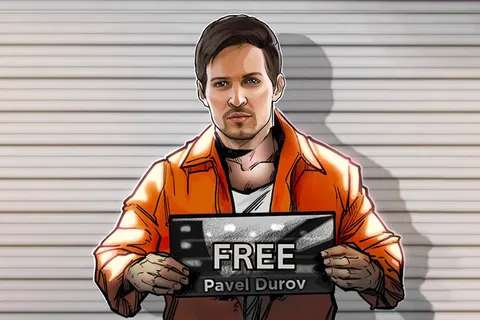
The April conflict around the messenger
On April 16, 2018, Roskomnadzor began blocking Telegram in Russia. In his address, Durov linked the confrontation to the refusal to hand over encryption keys and promised to protect users' privacy. He announced support for the creators of proxies and VPNs and named the movement Digital Resistance. For supporters of the messenger, this position represented protection of a familiar way of communicating, and the founder himself acquired the role of a person resisting external pressure.
In April, a symbol of a dog in a hood spread and actions with paper airplanes took place. Durov called on people to join the launch of paper airplanes on April 22; later he announced a following action. The Telegram badge helped connect the technical topic with a visible collective gesture. Memes accompanied this wave, turning the conflict into images of a hero, a liberator, or a patron. Such roles reflected participants' perceptions, not a literal transformation of the entrepreneur into a religious or state figure.
Telegram in the palm of a painted patron
At the center of the image is Durov's face, surrounded by a golden background. He is dressed in red and light fabric reminiscent of details of icon-painting vestments. One hand is raised in a characteristic gesture; the other supports a blue circle with the white Telegram paper airplane. Name and surname are written on either side of the head. This is a drawn stylization, not a photograph of a torso or a frame from a public appearance. The author of this specific image has not been identified.
A familiar digital badge is placed where a solemn portrait would expect a significant symbol. Such a transfer makes the messenger an almost precious object that the hero keeps for those around him. The face remains recognizable enough to link the image with the news. Gold, frontal pose, and clothing convey a lofty intonation, while the modern logo sharply reveals the meme alteration. It is the meeting of these two visual languages that creates the expressive contrast.
From entrepreneur to figure of gratitude
Before the April wave, Durov was already a character in internet jokes: his name was tied to changes at VKontakte, public statements, and staged photos. During the conflict over Telegram, the familiar subject of discussion received a different emotional role. The meme could express not irritation with the interface but gratitude for a preserved channel of communication. One person became a convenient image of a broader confrontation between technology and restrictions.
The icon form pushes this gratitude to hyperbole. It can be read as sincere admiration, ironic exaggeration, or mockery of an excessively strong personality cult. The accompanying text sets the direction. Without a caption, the portrait keeps its ambiguity: it simultaneously exalts the hero and shows the strangeness of such exaltation. That is why the image works in different discussions, where preserving an ordinary digital opportunity is experienced as an almost miraculous rescue.
A small miracle in a large group chat
In an invented variant, the caption under the portrait reads: “When the group chat finally loaded and the meeting address was still there.” The scale of gratitude is far bigger than the everyday result. The messenger seems to have saved the whole evening, though the practical benefit consisted of one surviving message. The contrast turns a serious political image into friendly self-irony.
Another invented plot shows a member of a gaming group who restored access to the correspondence and found a forgotten raid plan there. The portrait is accompanied by a solemn announcement of the return of ancient knowledge. A third example concerns family: a grandmother sent a voice message for the first time and immediately became the chat's main storyteller. The caption thanks the “patron of long stories.” These variants use the familiar emblem and an excessively elevated form, while preserving the picture's historical link to the struggle for access to digital communication.