The character and the film
Kylo Ren is the antagonist of the trilogy that began with The Force Awakens. His real name is Ben Solo, the son of Han Solo and Leia Organa. In The Last Jedi, released in 2017 and directed by Rian Johnson, the character finds himself at the center of an inner conflict. The role is played by Adam Driver.
Kylo Ren's image is built on contrast: he is emotionally unstable, enjoys showy cruelty, and yet often looks vulnerable. That contrast later became the main source of jokes about the character.
Where the still comes from
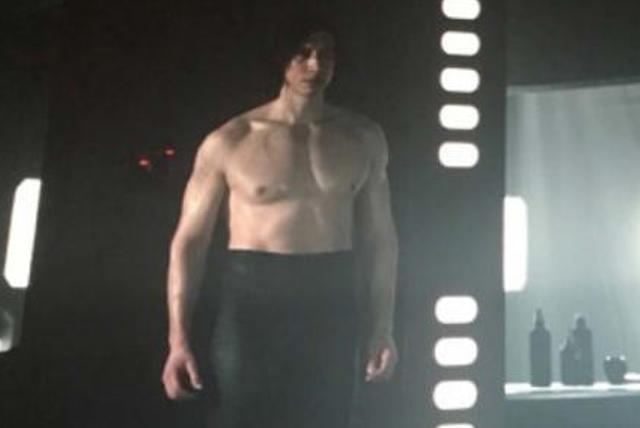
The image spread widely after the film came out. Its quality suggests it is either a screenshot or a photo taken from material that circulated online. The still comes from the film, but the exact scene and the source of the shot are not established. The shirtless character appears in several episodes, so the scene should not be named without confirmation.
The picture shows the hero in half-darkness: a dark background, glowing panels on the sides, and the figure standing upright and looking forward. This staging emphasizes solemnity, and that solemnity is exactly what the meme later pokes fun at.
Nickname and wordplay
The nickname “Ben Swolo” combines the character's name with the English slang word swole, meaning muscular. This is a typical device in fan jokes: the hero's name is lightly altered and the meaning becomes clear at once. The nickname spread through English-speaking communities, and the Russian-language catalog entry carried it over without translation.
The exact date the nickname appeared is not established. It is tied to the meme itself rather than to the film's official terminology.
Example captions
Typical captions build on the contrast between the character's serious image and his physique:
“The dark side is strong, but the muscles are stronger.”
“Warm-up before the big scene: three sets of fifty, one menacing glare.”
Captions like these stress that the character looks more imposing than his actions. The viewer doesn't need to know the specific scene to get the joke.
Why the joke works
The meme mocks a cliché: a dark character with a dramatic inner life who must, without fail, be given an athletic look. The viewer sees the hero presented as though his appearance matters more than the plot. The joke targets the character and a cinematic device, not the actor as a private person. The captions use nothing personal or demeaning toward the actor, and the joke remains good-natured.
In addition, the still is a handy template: it is used to show overconfidence, exaggerated sternness, or a scene in which the hero looks a little too dramatic.
Connection to meme culture
The character's image often returns in memes about serious figures, where drama clashes with everyday situations. For fans of the franchise the still remains a recognizable sign, while for others the meaning is read from the caption and the pose. The meme needs little context, which is why it lasts longer than discussion of the film itself. Captions on such stills are usually short, because the viewer already reads the pose and facial expression without explanation.
At the same time, the meme does not turn into ridicule of the actor or his appearance. The joke stays at the level of the character: it is about how film builds a hero and which techniques it uses to do so, not about the real person behind the role. This boundary helps the meme stay harmless even when it spreads widely.