The frame: board, shirt, and microphone
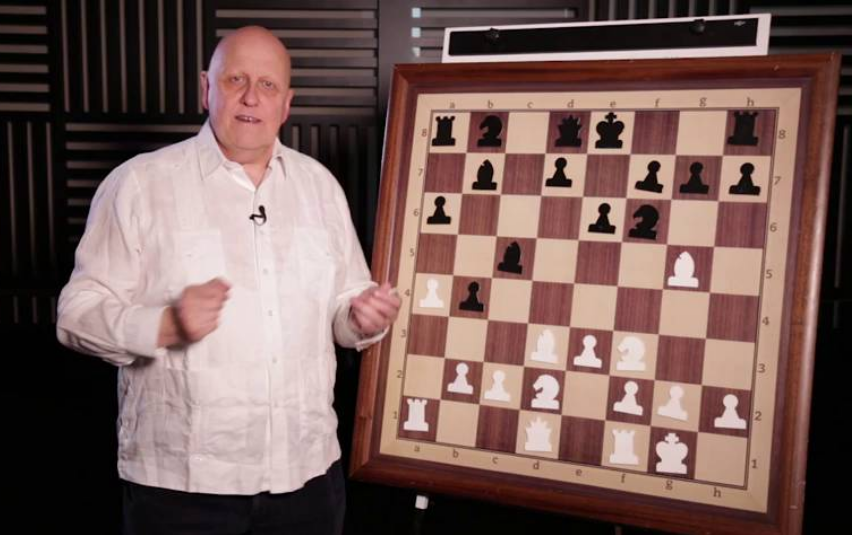
The photo shows a balding man standing to the left of a large wooden board. He wears a light quilted shirt with patch pockets, and a small lapel microphone is visible on his chest. His hands are slightly raised, as if he is explaining something, and his gaze is directed at the camera. The background is dark, with slats that look like soundproofing panels, as in a studio.
Pieces are scattered across the whole board, so the position looks like the middle of a game. The board makes the frame clear to a chess viewer: it is obviously about analyzing moves. The rest is up to the caption.
The 2017 video and the word “marvelous”
The source of the meme is considered to be a video series by the chess commentator Leontxo García for the Spanish newspaper El País. On the newspaper's blog, the piece “La jugada mágica de Bogolyúbov” appeared on February 27, 2017, and the video was uploaded to a YouTube channel on March 4, 2017. Using the board, the host reproduces a 1940 game between Ludwig Rellstab and Efim Bogoljubov and calls one of Bogoljubov's moves “maravillosa,” meaning “marvelous.”
This word became the meme's phrase. In the English version it turned into “outstanding move.” The analysis itself was serious and respectful: the joke appeared only after the phrase had been taken out of its context.
How the phrase spread through images
The earliest macros found date from May 2017: on May 8 a variant appeared on a meme site, on May 12 it showed up on Instagram, and on June 5 the picture was posted to Facebook. The clip of the original video was uploaded on June 21, 2017. The first English-language version reached Reddit on December 2, 2018.
It is not known who made the first macro. The earliest version found is not necessarily the first one, so these dates should be treated as approximate.
Caption examples and their logic
Below are invented examples. They show how the phrase changes meaning depending on context.
“Said I'd take out the trash after the third episode. Took it out right as the series ended.” The phrase sounds like self-praise, but the caption applies it to a household trifle. The contrast between the grandeur of the phrase and the modesty of the deed is what makes it funny.
“Picked the same salad as last time. Outstanding move.” The caption is restrained, but the solemn look of the frame turns a habit into a small victory.
“Put the kettle on without knowing it already had water in it.” Here the ironic praise sounds over an obvious blunder. The viewer understands that the hero does not notice his own mistake, and it is this gap that makes people laugh.
All three examples rely on a shift of expectation: the phrase promises a dramatic turn, but the event turns out to be domestic. The more serious the frame, the more noticeable the gap.
When the phrase is sincere
The macro can also be used without irony: when a colleague finds an unexpected solution and the team was ready to give up. In such cases the caption works as honest praise, and the photo supports it with its ceremonial air.
For irony, it is best to choose situations where a move looks clever only at first glance. The caption should be short, and the pose and the board speak for themselves. That way the joke is understood even by people who know nothing about the game or the video.