An expression people came to recognize
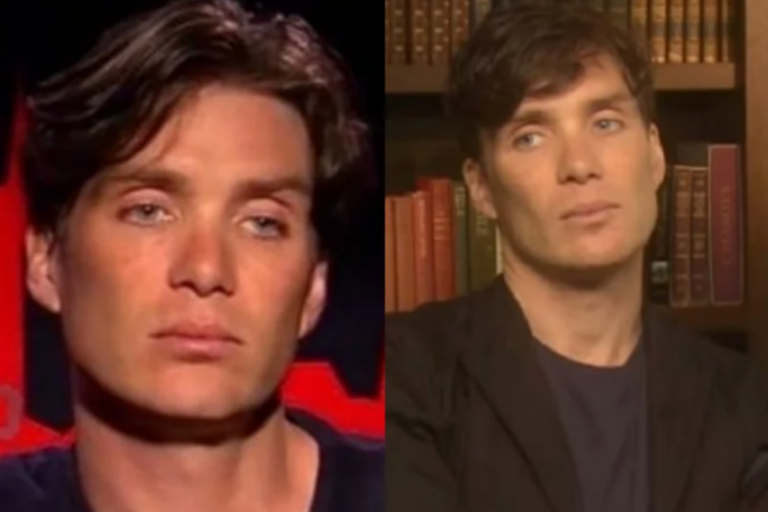
Versions of the meme show the Irish actor Cillian Murphy with a pensive, tired or displeased expression. The frames were taken from interviews, press events and TV appearances; there is no single scene that explains all the pictures. One of the early notable stages of its spread dates to 2017: users began collecting photos of the actor and joking that he is permanently disappointed in something. New images were added to the series later.
In this image, two portraits with a similar expression sit side by side, but different frames should not be passed off as one sequence of emotion. The pairing strengthens the repeatability of the reaction: no matter which event the actor was photographed at, viewers once again read quiet weariness. In 2017, in an interview, Murphy was surprised when asked whether he knew about the meme. This underlines the difference between a public image and the real person: an internet joke does not necessarily reflect how the actor feels.
A quiet reaction instead of a shout
The meme differs from loud outrage. Murphy barely changes his expression, and it is that restraint that lets you lay a long list of troubles, or one line about patience, over the portrait. The reader imagines that the character has already heard the explanations, revised the plan, and still doesn't want to argue. The calm becomes a comment on the absurdity: the situation is ridiculous enough that there is nothing to add.
For example: "when the meeting was moved ten minutes earlier but the notification arrived after it started"; "I'm reading the fourth message in a row that starts with 'quick question'"; "the update installed, but the problem is still there." Such captions do not claim that the actor personally went through these events. They use the familiar look as an observer's reaction. If a caption says "Cillian thought...," it is best to make clear that it is an invented thought, not a quote.
The character and the actor are not the same
Cillian Murphy is known for roles that call for a restrained presence, and viewers easily link the photo to his on-screen image. But the meme does not necessarily depict the character Thomas Shelby or the hero of any particular film. Some variants use a still from a film, others use footage from outside a role. Without the original photo's caption, it is better to speak of the actor's portrait and his expression, without inventing an event he is supposedly reacting to.
The image fits especially well when you need weariness without hysterics: an endless chain of small problems, someone's obvious excuse, a ridiculous rule. It is less suited to proving that a person despises someone or condemns a certain group. A facial expression does not reveal thoughts. A thoughtful caption makes the situation the target of the joke, not the actor's personality and not the person who was sent the picture.
Variations for your own reaction
For the classic form, describe the moment right after a repeating irritant: "when the client writes 'I already filled everything in' and sends an empty form"; "when someone tracks in dirt again on cleaning day"; "when the app asks you to log in after every update." A short caption lets the look stay the main thing, but a specific detail makes the example yours rather than a universal list of weariness.
If you want to expand the format, compare two frames: in the first, the person notices the problem; in the second, he already accepts it with heavy calm. You don't need to claim that the face changes because of your particular caption; that pairing is created by editing. The meme keeps its force through understatement: the character doesn't explain what he feels, so viewers easily project their own familiar irritation onto him.