The image
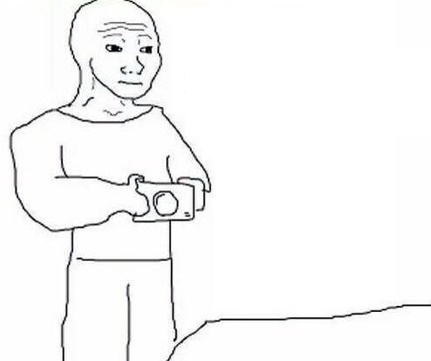
The picture shows a person with a flat face and a weary expression, holding a camera and standing apart from the general merriment. The background is minimalistic, without detail, so the figure reads as a symbol of alienation. The pose and facial expression register instantly, so a caption is almost unnecessary. In another version he says, "Can I go now already?", and the caption shifts the tone from indifferent to pleading.
According to records, the drawing dates to 2009. The exact author of the original sketch and the source have not been conclusively established in open materials, so the article relies on the picture's spread and its narrative structure.
Origin of the format
The image stands alongside other ironic drawings in which a schematic character expresses emotion through facial expression and pose. Such pictures spread quickly across forums and comment sections because they're easy to copy and relabel. Many creators captioned it with different phrases while keeping the original meaning.
The phrase "can I go now?" is an everyday request familiar to almost everyone. The meme translated it from a conversational gesture into a visual sign: the image alone is enough to convey that a person wants to leave but can't do it politely. The childlike ring of the Russian colloquial phrasing adds to the picture's comedy.
Usage
Today the picture is used in conversation when the other person has dragged out a conversation, when a party has become boring, or when someone needs to hint that they want to leave. The caption keeps the polite form, so the joke works without crudeness. In conversation the picture is often sent with a short comment like "I'm already tired of being there," which further underscores the irony.
The variations change the circumstances: in some captions the character is at a party, in others at work or at a family dinner. The picture is equally recognizable in all contexts, which helps it stay in circulation longer than one-off memes.
In some communities the picture is used as a reminder about boundaries: when a person has spent a long time in unpleasant company, they can send it without saying a single word out loud.
Cultural context
The meme accurately captures the social awkwardness many feel at events where they have no close acquaintances. The humor doesn't rest on mocking a specific person but on a recognizable feeling, which is why it's rarely seen as offensive. For many users it has become a way to soften a direct request.
If verified information about the original source and author surfaces, the article should be revised. For now the description relies on the picture's general character and its spread rather than a documented creation history.
The template's meaning is also tied to the culture of parties and obligatory gatherings, where it's awkward to leave and hard to stay. The picture translates this awkwardness into a clear symbol that can be shown instead of an explanation. Sometimes the caption is paired with a photo from a real event, adding an ironic contrast, but those are already separate, individual variations. In this way the meme stays relevant across different generations of users.