A video that spread across different corners of the internet
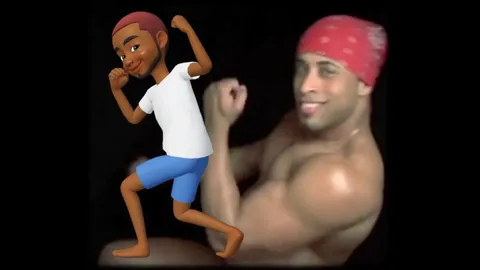
The story of Ricardo Milos begins not with a caption to a portrait but with a dance video that circulated in adult-oriented corners of the internet. In October 2010, the clip appeared on the Japanese video service Nico Nico Douga and entered the Gachimuchi scene, a community where users re-dubbed, re-edited, and animated the footage they found. Early dates in different chronicles diverge by several days, so it is safer to say October rather than name one exact day as the first. In 2011 the dance was already becoming material for MAD videos and animations; in 2018, separate short cuts and video substitutions again brought it wide fame in different language segments.
What this frame conveys
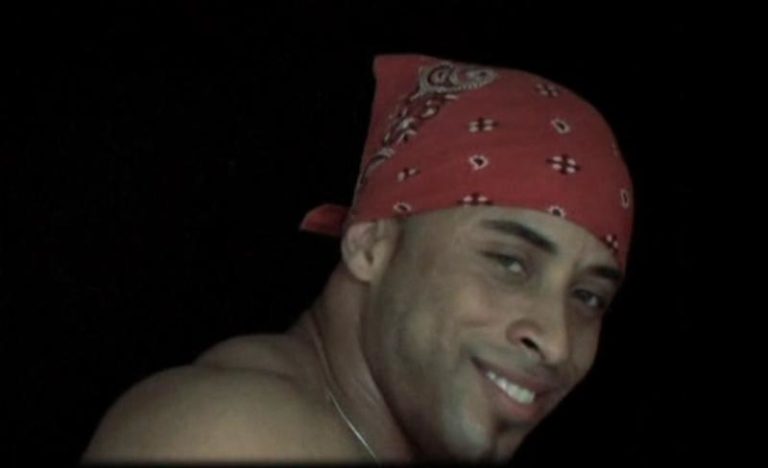
There is no full scene here: the face, red bandana, and dark background are visible. The frame does not show a sequence of movements and does not allow tying it to a specific moment of the original recording. It works as a recognizable visual sign: a viewer familiar with the dance reconstructs the energetic pose and music from a single face; an unfamiliar viewer sees an expressive portrait of a man in a bandana. Therefore the meaning depends on the caption and the audience. In one post it will be an invitation to a ridiculous dance, in another the entrance of someone convinced he has already become the center of the room.
How the dance became a reaction
In the original video, the movement is the main thing: Ricardo repeats several poses and turns, delivering them with pronounced stage confidence. When recognizable seconds are cut from a long clip, the dance turns into a ready-made reaction to music, a compliment, or a sudden surge of energy. Russian-language reposts in 2018 often reduced the image to a short visual exclamation: a person seems to have heard a familiar rhythm and immediately went on stage without waiting for an invitation. Sometimes the humor lies precisely in the mismatch: around him an ordinary everyday situation drags on, while the character behaves as if a show has already started, though no one called for it and the hall has not even gathered. In other edits the image appeared as a sudden insert into a completely unrelated video, working as an effect of unexpected switching: a calm video suddenly breaks off into a dance that the viewer recognizes before they have time to grasp the reason for the cut. Hence the role of the face as a shorthand symbol of a longer number, which the viewer silently finishes in their head.
Invented captions
Invented caption: “They turned on the party intro, and you already know all the moves.” The portrait here replaces an entire dance number: those who are familiar catch the hint, while bystanders see only sudden self-confidence. Another variant: “My coworker said there would be quiet music at the corporate party.” The caption promises a calm evening, while the expressive image argues with it in advance. For a softer joke, this works: “Alone at home, but the chorus still demands a stage entrance.” In all cases the words set the situation, while the frame supplies theatrical energy. These are invented lines, not quotations from Ricardo and not captions to the original recording.