The inscription and the bracket play
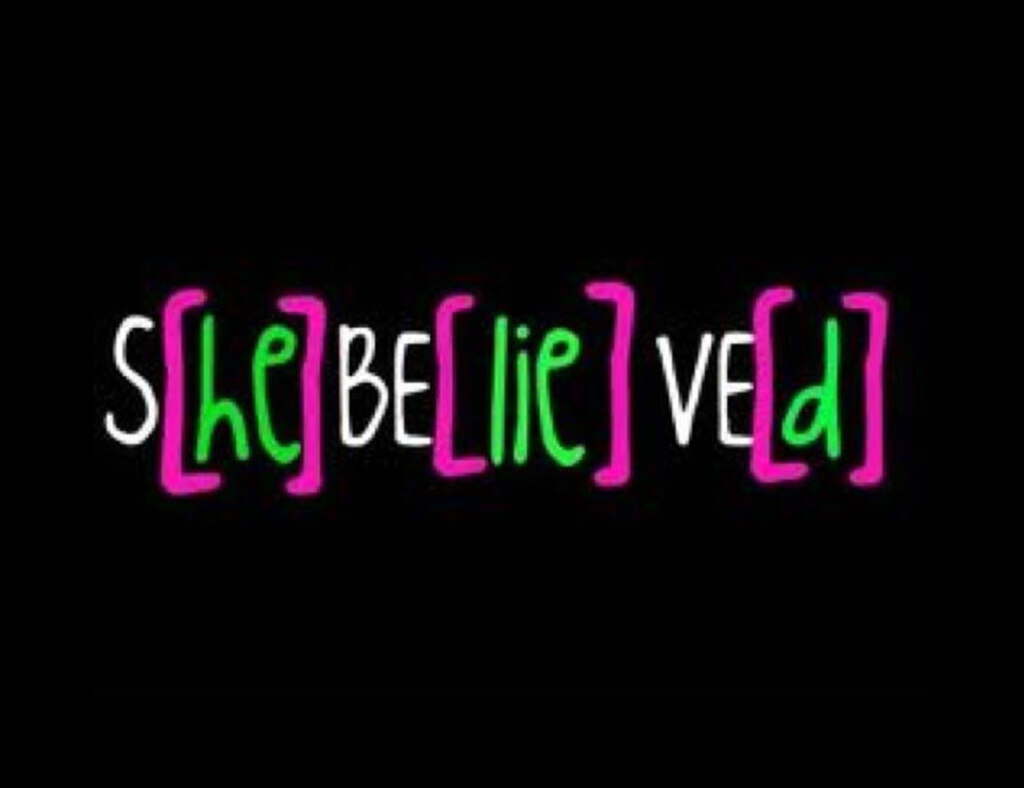
The picture shows, on a black background, the text S[he] BE[lie] VE[d]. The letters “he”, “lie” and “d” are highlighted in green and enclosed in pink square brackets, while the other letters are white. Visually it is a simple typographic joke, and the entire point rests on the highlighting.
Read the words in full, and you get “she believed.” Read only the highlighted part, and “he lied” emerges. The phrase speaks both of gullibility and of someone else's deception at the same time, and this double reading is the meme itself.
What is known about the origin
Who came up with this inscription and when could not be established from verified sources. There is neither a confirmed first publication nor an author, so attributing a specific year or platform to the meme would be invention.
The device itself has been known for a long time: a hidden word sits inside another word, and it is highlighted so the reader sees the second meaning. Such wordplay is understandable without explanation and is not tied to a single source, which is why similar jokes appear independently of each other.
How the joke works
The effect rests on giving an ordinary text a hidden commentary. The reader first sees the familiar word, then notices the highlighted letters and rereads the phrase. It is this brief delay of a split second that creates the effect: the meaning flips to its opposite without changing a single letter.
The theme of such a joke is most often one: naive faith in words and deception. But the device itself is universal and can be applied to any phrase that allows a double reading. The only requirement is that the hidden word must truly be part of the phrase's foundation.
Three captions using this scheme
Below are examples showing how a hidden word is constructed. These are independent invented variants in English, because the device relies on English words.
“I k[no]w what I'm doing.” The highlighted “no” makes the phrase confidently say “I know,” while the highlighted letters immediately say “no.”
“Tr[us]t me.” The highlighted “us” turns a request for trust into a conversation about “us”: the joke suits captions about shared plans that usually fall apart.
“Pro[mis]ed.” The highlighted “mis,” a prefix meaning error, makes the promise look like a mistake right away.
The general principle is simple: the highlighted letters must form a word with an opposite or commenting meaning. The shorter the phrase and the more obvious the hidden word, the stronger the effect. If the reading with and without the highlighting matches, the joke fails: the reader sees only odd formatting and does not find the second meaning the whole thing was built for.
How to use the template
The picture suits captions for stories about broken promises and fruitless expectations. Since the hidden word “lied” refers to deception, it is better used as a general joke about gullibility rather than as an accusation against a specific person.
For your own variants, look for words in which the hidden word falls on a boundary between morphemes or syllables. Then the highlighting looks natural, and the second meaning seems to appear on its own.