The scene that gave the phrase
The HBO miniseries “Chernobyl” premiered in May 2019 and depicts the accident at the fourth reactor unit of the Chernobyl Nuclear Power Plant in April 1986. In the first episode, deputy chief engineer Anatoly Dyatlov, played by Paul Ritter, hears a dosimeter reading of 3.6 roentgens per hour and replies, “Not great, not terrible.” Users began to substitute this calm formula into situations where a problem is clearly being underestimated.
The exact date of the first meme use of the line is not established: it is only known that the phrase spread shortly after the series came out. Who made the first joking caption is unknown.
What is visible in the frame
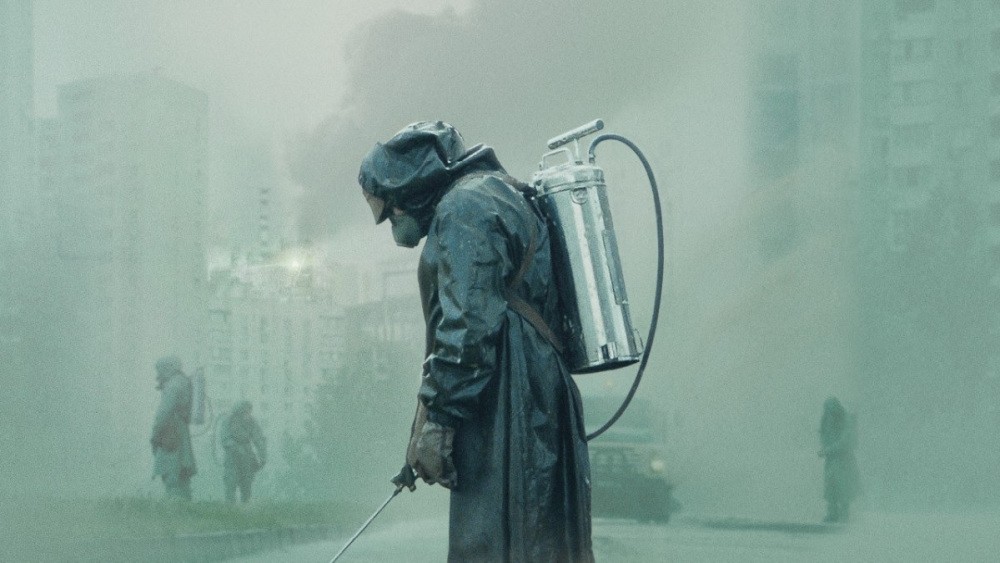
The picture shows a person in a dark, heavy hooded raincoat and a respirator, standing sideways and leaning slightly forward. Straps run across the shoulder, and a silver metal tank with a flexible hose sits on the back, with a long sprayer wand in hand. Everything is wrapped in greenish-gray fog.
In the background, tall residential buildings are blurred; on the left two figures in similar clothing are visible, on the right one more, and behind the main figure a dark car can be made out. The hero’s face is almost hidden, so the frame conveys not a specific emotion but an anxious, heavy atmosphere.
If a caption does touch a grave subject, it is better to choose abstract everyday situations, such as reports, renovations or delays, where a calm line contrasts with obvious disorder. That way the joke stays about the habit of underestimating a problem.
Why the template works on understatement
The joke rests on understatement. One person sees an alarming number and picks an evasive formula, while the viewer understands that reality is far more serious. The mechanism is recognizable: everyone pretends that things are fine until the problem becomes obvious.
The darker the picture and the calmer the caption, the stronger the gap. That is why the template fits wherever life says ‘so far so good’ or ‘nothing critical’ while in fact things are going far from well.
Caption examples
“Said ‘overall it’s fine,’ and the bank has already sent the third reminder.” The alarming frame sets the scale, the calm formula dodges the question, and the gap between them creates the laugh.
“Accounting: ‘not critical yet, but we’re looking into it.’” The caption about the quarterly report sounds like a diagnosis that a doctor does not want to say out loud.
“Kitchen renovation: a bit of dust, nothing to worry about.” An everyday situation gets a dramatic picture, and the viewer understands for themselves how unpleasant everything is.
In all three captions the rule is the same: first an alarming image, then a short calm formula that pretends everything is in order.
Limits of the template
The frame refers to a real catastrophe in which people died and were injured. For that reason, jokes here are acceptable only about everyday downplaying, not about the victims, the liquidators or their fates. Captions about real illnesses and deaths are better not made at all.
If historical context is needed, remember that the series is an artistic version of events and diverges from the real facts in details, so quotes and figures from it should not be presented as an accurate chronicle.