A frame against the backdrop of a major event
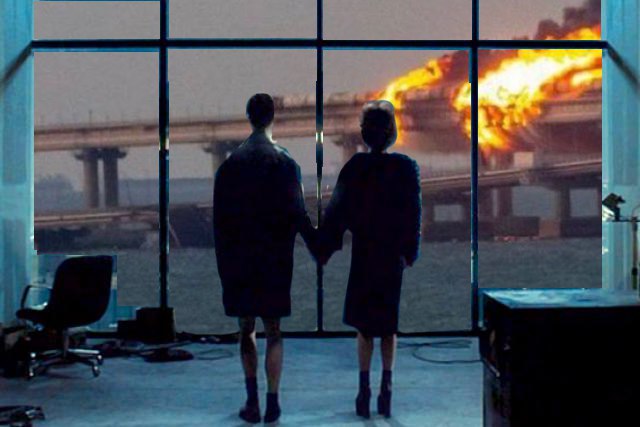
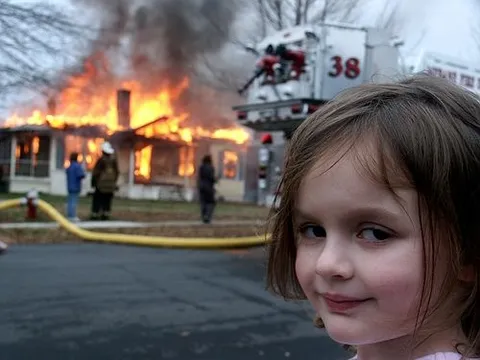
The local image shows two figures standing at a panoramic window and, in the distance, flames on a bridge. This is a stylized scene, not an exact news photograph of the event. Montages like it combined a recognizable symbol of infrastructure with the reaction of onlookers and circulated after the explosion on the Kerch (Crimean) Bridge on October 8, 2022.
The explosion damaged the road section of the bridge, and the fire affected a railway train; people were killed. Responsibility and the political interpretation of the event became the subject of public statements and investigations. It is therefore correct to separate the established fact of damage to the bridge from the parties' claims about who organized the attack and for what purpose. The image by itself establishes neither the perpetrators nor their motives.
Why memes arose around the episode
The bridge had major symbolic and transport significance, so footage of the fire quickly became part of the news and online stream. The meme composition, in which people gaze into the distance, turned the event into a reaction: anticipation, surprise, anxious watching or an outsider's comment. Different audiences used it in different ways, and a single template does not allow generalizing about the attitude of a whole country or people.
In this picture, the meme element is not a technical diagram of the incident but the contrast between calm observers and the dramatic background. Yet behind the striking visual metaphor are real damage and people who died. For that reason the deaths of people are not presented as an amusing outcome, and calls for violence are not supported. One can discuss the role of symbols and internet reactions without turning a tragedy into a carefree attraction.
The speed with which such montages spread is typical of major events: users take familiar visual reactions and attach them to a new news hook. This explains the spread of the template but does not establish the authorship of any particular version or reveal the opinion of everyone who shared it. The historical context and the meme context should be kept separate.
How to talk about a political meme responsibly
If you use the image in a conversation about the news, the caption should make clear that it is a personal reaction or a joke, not confirmation of the circumstances of the attack. For example: “When you see yet another breaking headline and first try to work out what is already known.” This mocks information overload, not the people affected by the event.
Another option is to move the composition to a made-up situation: “The neighbors noticed that the stairwell renovation started with fireworks again.” This keeps the dramatic contrast but claims nothing about real participants in the war. Do not attribute a specific emotion or political position to the people in the picture: stylized silhouettes do not provide such information.
Caption and visual presentation
Keep the window, the figures and the fire visible: the meaning is built on setting the viewers against what is happening behind the glass. Do not put text over the flash itself; it is the key visual detail. If a post is about the historical event, add neutral context outside the meme and do not pass off the montage as an original photo from the scene.
It is better to keep the tone restrained, especially since the audience may include people directly affected by the war. You can joke about the news cycle, bewilderment or fatigue from constant notifications. Do not mock the dead and the injured, do not call accusations established truth, and do not draw conclusions about whole groups of people from a single viral picture.