What's shown
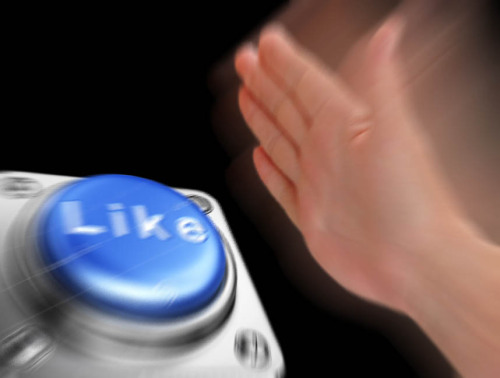
The picture shows a glossy blue round button with a white metal base and the word "Like" in white letters. The background is black, so the button stands out as a bright spot. On the right side of the frame, a blurred hand appears, moving toward the button as if about to press it. The blur on the hand and button creates a sense of fast, almost impulsive motion.
The image looks like an advertising or stock illustration done in a 3D-graphics style: highlights, volume, and careful lighting are typical of commercial pictures chosen for presentations, banners, and articles about social media.
Origin
The shot belongs to a type of stock image that was being produced in the 2010s, when "Like" buttons became a symbol of interaction on social networks. The author, the agency, and the date of first publication are not known, so any specific dates should be treated as tentative.
The name "NUT Button," which has stuck to the picture in meme catalogs, and its origin and meaning are unconfirmed. It's most likely an informal label coined by users rather than an official name for the image or the button.
Why the button became a meme
The "Like" button has become one of the main signs of modern online culture: it signals approval, interest, or simply presence. The picture visualizes the reflex with which users hit the mark without reading the text. The moving hand looks as though the person is pressing like faster than they can process the content.
It's exactly this gap between action and thought that makes the meme recognizable. The viewer understands it's about hasty agreement and takes the image as a short, clear joke that needs no further explanation.
How the meme is used
In comments, the shot is usually paired with phrases like "liked it without looking," "when you agree with absolutely everything," or "hit it before finishing reading." The image is also used to express an attitude toward other people's posts: the blue button becomes a sign that the user reacted quickly, almost automatically.
The meme is often used as a template for irony. For example, it gets attached to posts that users approve of against their will, or to situations where agreement is given purely out of politeness. The picture travels easily into different contexts because it doesn't carry an inherent judgment and isn't tied to any specific person.
Meaning and cultural context
The meme can be read as a light critique of engagement culture. A like turns agreement into a gesture that takes a second and demands almost nothing from the user. The joke is aimed not at people but at a habit, which keeps it friendly and easy to understand. Interestingly, the button itself barely changes from one use to the next, but the meaning depends each time on the caption, the tone, and the situation in which it's posted. It's exactly this balance between a constant image and a variable text that gives the meme its long life in the feed.
The simplicity of the composition matters too: one button, one hand, one word. This minimalism lets the meme work without a caption, and the caption itself is added by whoever is posting it, which keeps the template flexible and durable.