The picture first acquired a legend
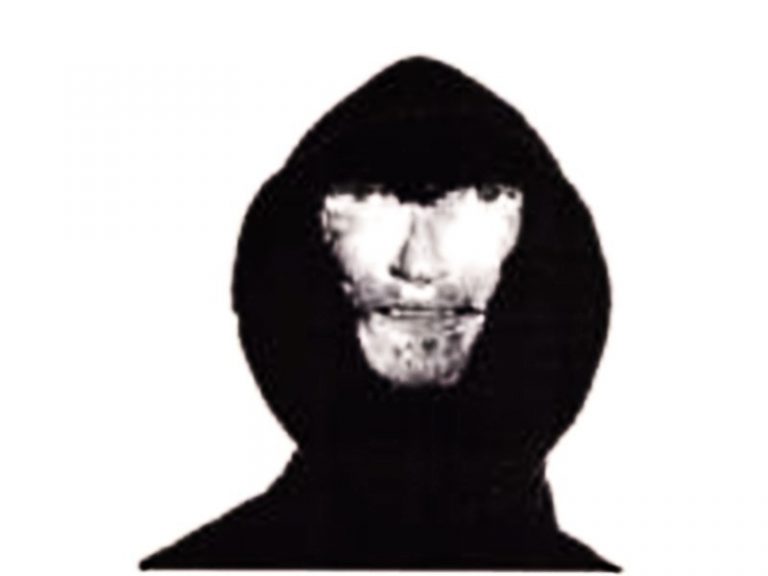
One of the earliest known traces of the image dates to the /tg/ board on 4chan in 2010. A participant in the discussion said the face frightened him and called the picture a police reconstruction of a suspect’s appearance. This anonymous attribution established neither the image’s author nor the existence of any such case. At first, the network spread mainly a mysterious portrait accompanied by stories about how unpleasant it was to look at.
In late 2015 a new wave arose on 4chan and on the Russian-language Dvach. Creepypastas were written around the face, videos were made, and a fake wanted notice for a dangerous man was invented. The name “Albanets” became attached to this online story. It does not prove the nationality of the person depicted: the identity of the figure is unknown, and the accusations in the scary text are part of the fiction. Later the picture kept returning as familiar material for remixes.
A hood hides everything except the face
In the image, a black hood stands out sharply against a white background. The pale face is grainy, the areas around the eyes are dark, and the features are hard to make out. The clothing and shoulders almost merge into a single silhouette. There is no name, no caption, no official seal, and no details of the surrounding space. The viewer encounters a face stripped of the usual biographical and everyday information.
This uncertainty suits a scary story. The small picture does not answer who is in front of us, where he is, or why he looks toward the viewer. The missing information can be filled with a threat without changing the portrait itself. The graininess makes it resemble a poor copy of an unknown document or an accidentally saved frame, although that impression by itself says nothing about how it was actually produced.
From a frightening file to a character in a work
The creepypasta turns an ordinary viewing into an event: as if the viewer had received a dangerous file or broken a prohibition. Stories about the supernatural effect of an image were built on exactly this device. The picture acquired an imagined property, and the reader was made a participant in what was happening. The fake wanted notice added another kind of persuasiveness: an official tone meant to give the fiction the look of an urgent message.
Repetition simultaneously weakens the fear. A recognizable face begins to evoke the expectation of yet another strange caption; it gets dressed up and placed into everyday scenes. The comic version keeps the threatening look but assigns the hero a trivial task. He seems ready to step out of the screen, yet he comes only to ask for the guest Wi-Fi password.
In 2021 this old image was used as An Intruder in Alex Kister’s The Mandela Catalogue, a horror series built partly on imitating recordings and instructions. The new role gave the face the context of a specific work. It does not explain the origin of the early picture and does not make Kister its original author: an already existing online image entered another story.
Three everyday appearances of the scary guest
In the first imagined sketch, the portrait appears in a notification about joining a video call. Caption: “The camera was turned on by a person whose driver update is still running.” Instead of a mysterious intrusion we get an ordinary technical awkwardness, and the poor quality of the picture becomes part of the explanation.
In the second, the hero stands at a cloakroom counter with a claim ticket and the words: “Was your raincoat the one with the hood, or is this mine?” The frightening clothing turns into a mix-up at work. The face remains the same, but the need to sort out someone else’s things makes it unexpectedly down to earth.
The third variant imitates a scary note: “I know where you live. Courier.” Next to the portrait one can show a neatly left bag of buns. The formula of a threat gets an innocent continuation, and the viewer rereads the already familiar image. It is precisely the replacement of expected danger with a small everyday duty that turns the creepypasta character into a participant in a comedy.