The Joker and the smile on the glass
The line is associated with Heath Ledger’s Joker in Christopher Nolan’s 2008 film The Dark Knight. He says it while telling stories about his scars. The words sound almost friendly, but the Joker’s calm delivery makes them unsettling: a question that might invite someone to relax becomes part of an intimidation routine.
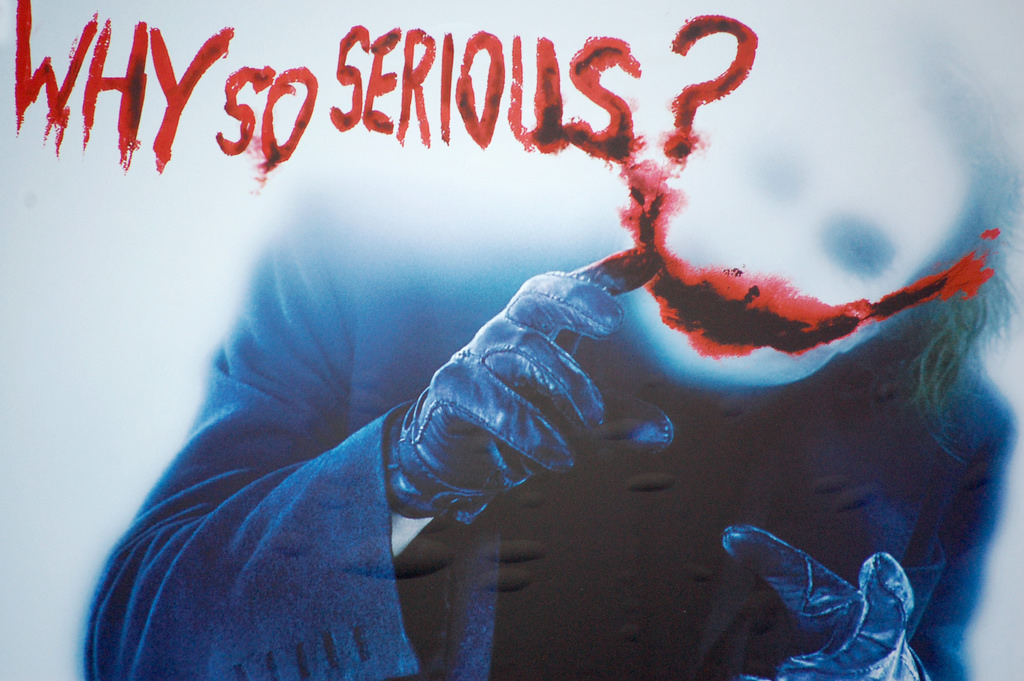
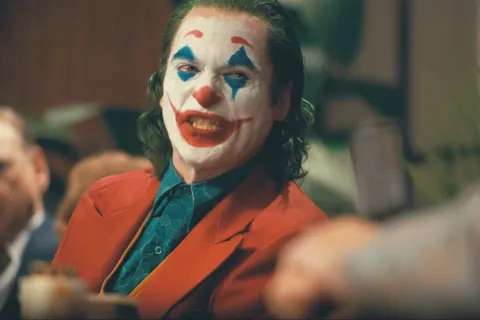
In the promotional image, the Joker’s face is blurred behind fogged glass. A red smile drawn on the glass sits in front of it, and a gloved hand’s fingers seem to finish its outline. The words Why So Serious? repeat the same red. The poster does not need a clearly visible portrait: instead of an ordinary smile, the viewer sees a mark on the glass that looks both playful and threatening. It is a promotional image for the film, not a still from the scene in which the Joker says the line.
The question became the name of an elaborate interactive campaign
Before the film’s release, Why So Serious? was the name of a campaign created by 42 Entertainment for Warner Bros. It ran for fifteen months and invited fans to take part in the life of fictional Gotham: they could support Harvey Dent, become the Joker’s accomplices, or search for traces of Batman. The audience was given a role inside the story, not just another trailer to watch.
The puzzles reached beyond the screen. Participants followed clues using coordinates, called phone numbers displayed as part of the clues, and found mobile phones inside birthday cakes. This kind of promotion helped establish the question as a marker of the film’s world before the line became a stand-alone online reaction. The campaign’s history and the history of individual meme edits are different things: a well-known promotional title does not identify who made the first humorous edit.
How a threat turns into teasing
In an everyday joke, the question is aimed at someone treating a small matter as if it were extremely important. Beside the grim Joker, ordinary frustration with a game rule or a bad photo starts to look like a scene from a serious thriller. The meme exaggerates the tension to show how disproportionate the cause and reaction are.
Another option is self-deprecation: the author admits to being far too dramatic about something trivial. Here the Joker is not describing another person; he is voicing an inner comment. Still, the line does not always sound friendly. When something genuinely unpleasant has happened, a mocking invitation to relax can easily become cruel. The situation sets the tone: the same poster can convey playful teasing or cold sarcasm.
Invented caption examples
“When you picked the wrong piece in a board game and have already demanded that the tournament rules be reconsidered.” The poster turns a game at home into an almost courtroom-like drama about fairness. “Me after my third attempt to choose an avatar for a seven-person group chat” is a self-directed version: a small decision carries far too much emotional weight.
The smile itself can be part of the joke: “The photographer says to relax, and I’ve spent ten minutes wondering what a relaxed face looks like.” The red outline on the glass becomes an exaggerated attempt to follow the instruction. All three situations are invented; the question is aimed at funny over-seriousness, and a recognizable smile plus one specific reason is enough for the viewer to fill in the rest.