The film and the character
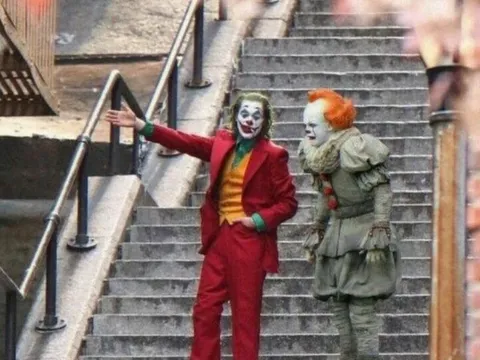
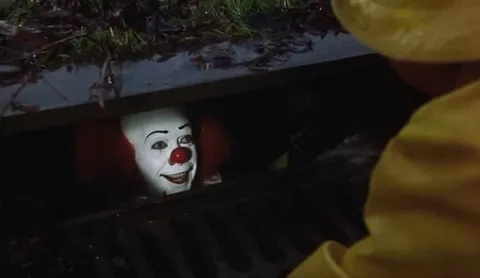
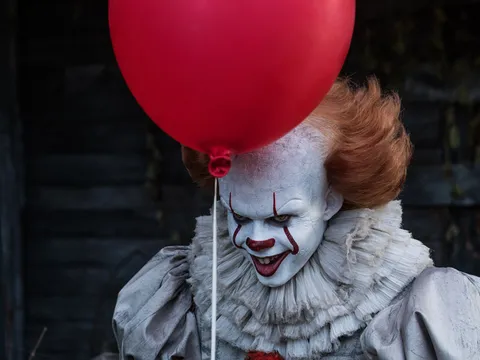
"It" is a 2017 film adaptation of Stephen King's novel, in which the clown Pennywise became the main antagonist. Actor Bill Skarsgård played the character in such a way that his physicality and movements quickly became a topic of discussion among viewers. The film drew a large audience and was discussed throughout that entire summer, so any scenes featuring the character quickly became material for jokes.
In the film, Pennywise appears in several scenes with unexpectedly dance-like energy. It was exactly these moments that became material for parodies, since viewers noticed the contrast between the frightening character and the inappropriate lightness of his movements. The film's visual language was built on contrasts of light and shadow, and the sharp cuts to dance-like movements looked especially jarring.
How the meme appeared
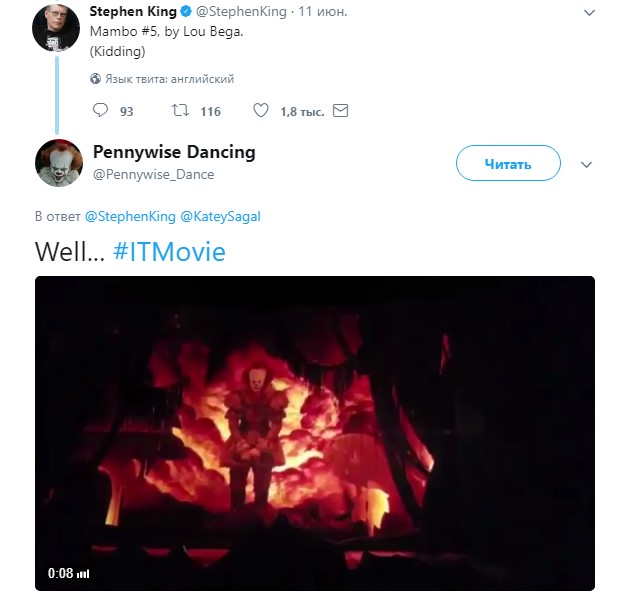
A screenshot of the exchange shows that the story began on Twitter. In June 2017, Stephen King wrote that the clown dances to Lou Bega's "Mambo No. 5," immediately noting that it was a joke. The Pennywise Dancing account replied with a short video of the character dancing in red light. The account's reply was built as a short quip, and it was exactly this brevity that made the video easy to repost.
The exact chronology of the series of videos and all their authors have not been established. The series dates to 2017, and the screenshots of the exchange serve as the main reference.
Format and variants
The series was built on a simple scheme: a clip of Pennywise, an unexpected song, and a caption pretending the clown chose the track himself. Clips were cut to different tunes, and sometimes to everyday situations. The clips usually lasted a few seconds, and this format allowed them to be rewatched many times, finding new details in the movements.
The Pennywise Dancing account became the center of this thread: its captions were short and detached-ironic, which created a recognizable style that other users picked up.
Why it's funny
The laughter comes from the contrast: a sinister character in makeup performing a flippant dance. The more serious the image, the funnier its everyday physicality, and this device has long been familiar to comedy. The comic effect is heightened by the fact that the viewer knows how frightening the character can be in the film's scenes, so the dance is read as a deliberate mockery of its own image.
Stephen King, as the author of the novel, joined in the game, which amplified the effect: the character's creator seemed to be playing along with his own story. Such a gesture reads as self-irony rather than an attempt to grab attention.
Cultural context
Parodies of scary characters are a long-standing genre of internet humor. Pennywise here isn't an object of mockery aimed at the actor or at a specific person, but a character from the film, and the meme works as a game with his image. Such games with well-known characters usually don't require knowing every plot detail, and the meme is easily understood by anyone who has seen even fragments of the film.
The tags "Movies" and "Stephen King" show that the meme is tied to film and literature rather than to a private individual. Thanks to this, it fits easily into conversations about the film and about dancing in pop culture.