Dance roots in New Orleans
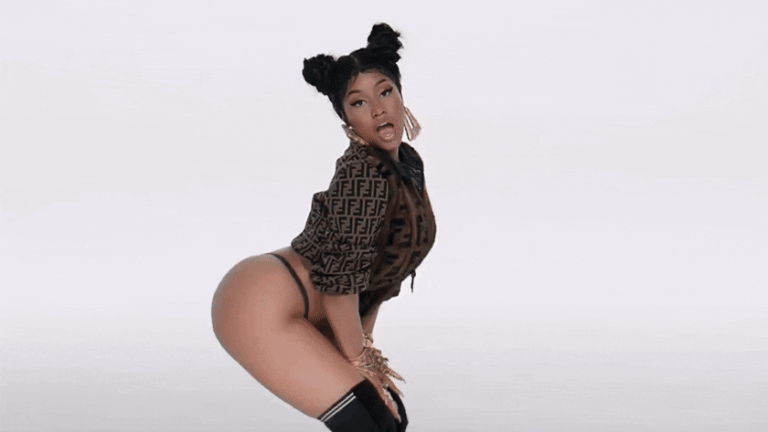
The movement later named “twerk” took shape in the club scene of New Orleans in the late 1980s and early 1990s as part of the bounce music genre. DJs and MCs built tracks around a fast beat, to which dancers made sharp, rhythmic pelvic movements that made the buttocks move independently of the torso. The word “twerk” first appears in bounce artists’ lyrics in the first half of the 1990s. It is associated in particular with DJ Jubilee’s 1993 track “Do The Jubilee All,” where something close to “twerk something” can be heard.
In the following years the dance remained a local Southern phenomenon, performed mainly at parties, in bounce artists’ music videos and at street parades. Its roots are also traced to the broader tradition of West African and Caribbean dances, where active hip work has a long history, long before the term itself appeared.
Move into YouTube culture
With the spread of video-hosting sites, the movement began to live a life separate from the bounce genre. In the second half of the 2000s YouTube saw videos of girls demonstrating twerking technique, often shot on amateur cameras in bedrooms or at home. One notable phenomenon was the group “Twerk Team,” whose videos drew millions of views and partly set the visual canon of the genre: a static camera, emphasis on the hips, and minimal additional choreography.
It was in this period that twerking became established as a distinct unit of internet content. Clips were reposted on forums and blogs, and the move began appearing in hip-hop and R&B music videos, spreading beyond the Southern US states.
Explosion of popularity after 2013
The decisive moment in turning twerking into a mainstream meme was Miley Cyrus’s performance at the MTV Video Music Awards in August 2013, where the singer performed the move on stage together with dancers. The performance provoked a wave of discussion, parodies and outrage at once, and searches for “twerk” surged. The word was officially added to Oxford Dictionaries Online that same year.
The episode sparked a debate about cultural appropriation. Musicians and journalists from New Orleans, including bounce performer Big Freedia, publicly reminded people that the dance had existed for decades before it reached mass pop culture through a white performer.
Memes, challenges and captions
After 2013 twerking became a genre of short videos in its own right. Users filmed their own versions of the move, often with an unexpected twist, such as an abrupt cut from a calm scene to twerking under a bass drop, which became a separate meme device on TikTok and similar apps. The genre is regularly played for laughs through failed attempts to replicate the move and the mismatch between a serious setting and a sudden dance.
Typical captions on such clips play on the contrast between expectation and outcome: “when the teacher steps out of the classroom for five minutes” or “I’m just warming up, don’t mind me.” The caption is placed before the actual twerking begins, heightening the comic effect of surprise.
The dance’s status today
By the mid-2010s twerking had split into two parallel phenomena. As a dance discipline it is taught at master classes and used by professional dancers in music videos, while as an internet format it remains a source of short viral clips and reactions. Both currents continue to exist side by side, occasionally intersecting when a celebrity performance or a dance challenge brings the topic back to the top of discussions.