Who is in the frame
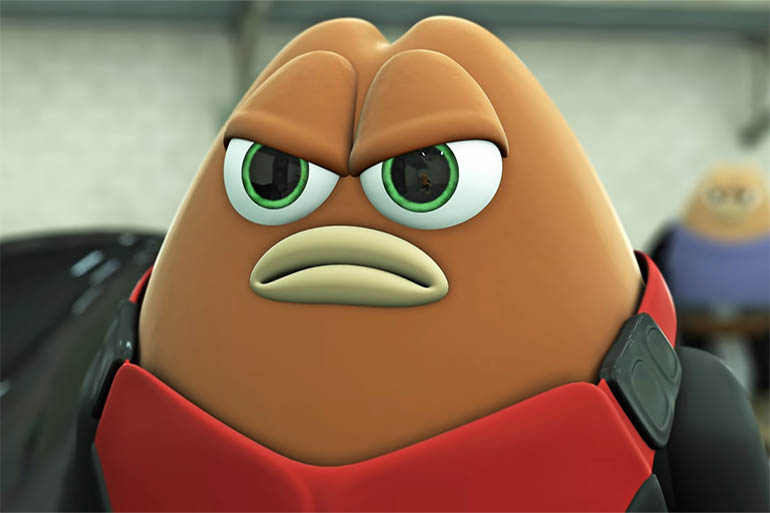
The image is a close-up of a computer-animated hero: an oval brown head with no neck, thick eyebrows drawn toward the nose, green eyes, and tightly pressed lips. The collar is red and black, and in the background another similar character in glasses is faintly visible. The expression is deliberately stern, almost offended.
Which exact scene the frame comes from is not established: from the picture alone it can only be guessed, and naming a scene without confirmation would be invention.
The film one person made
The world where all the characters are living coffee beans was created by animator Jeff Lew. He wrote the script, directed, produced, and animated most of the film himself. It began with short films: “Killer Bean: The Interrogation” from 1996 and “Killer Bean 2: The Party” from 2000. According to encyclopedic sources, the second one gathered about a million views on iFilm in half a year, and later more than four million on YouTube.
The feature-length Killer Bean Forever was shown at the Toronto film festival in September 2008, and on DVD in the United States it was released on July 14, 2009. About five years went into it. In the plot, a hitman learns that the agency he works for has turned into corrupt mercenaries, and decides to destroy it.
From DVD to internet cult
Notable interest in the film emerged in the late 2010s: it was posted on YouTube in high resolution, and viewers began picking scenes apart for quotes and jokes. One critic called the film a failure but still recommended it as a movie so bad it is good, the kind of film people watch for fun. The meme dates to 2017, with a spike on TikTok around 2020.
The Russian title “Ubit Boba” (Kill Bob) is a loose version of the English Killer Bean (a pun on “Bob” and “bean”). Whether it was ever an official title has not been verified.
Where the humor lies
The meme lives on incongruity. The hero is shown as a ruthless professional, but his face is a smooth oval without the facial expressions that usually make such heroes menacing. The more serious the action, the funnier it is that the main character is a vegetable.
The second layer is excessive seriousness. The film reads as an attempt to play an action movie strictly by the genre’s rules, and it is funny to see the rules followed to the end.
Caption examples
“Me on Monday, when someone in the chat asks who will take the new project.” A stern face and a small everyday drama. The more trivial the reason, the higher the stakes.
“When they put onions in my shawarma even though I asked for none.” A celebration of excessive seriousness, in which revenge seems proportionate.
“My cat after the words ‘there’s no more food.’” A threatening scowl is applied to someone who is incapable of it.
In every case the joke works through the gap between the scale of the reaction and the tiny cause.
How to use the frame
The frame suits captions about restrained anger and principled offense. It is better to place the caption at the top and leave the face untouched: the eyebrows and mouth do all the work. Do not tie the joke to real people or violence: everyday annoyance is enough.