First the father from the comic, then the Russian phrase
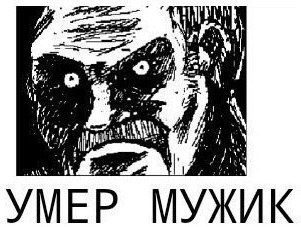
The drawing is connected with the internet comic series What's All This Racket?, also known as Mirada Fija. Early traces date to April 2009 and the anime section of 4chan. In the original scene the father comes to his son, asks what is going on, and receives an answer about Japanese animation. The final panel shows a fixed, displeased stare. It was this face that became usable separately from the original conversation.
It was inserted into other comics and comments, conveying silent indignation or disappointment. Much later, by the end of 2017, a version “Umer muzhik” appeared in Russian-speaking circles, and in 2018 it spread through meme communities on VKontakte. Priority for the specific author of this caption remains disputed. The history of the drawing and the history of the Russian phrase differ: the old character had existed for many years before receiving a new absurd announcement beneath his portrait.
The gaze stays, the explanation disappears
The picture is done in a crude black-and-white style. The man's face occupies the upper part; he has a mustache, noticeable creases on his forehead and small white pupils inside large black eye areas. Because of the strong contrast the gaze seems especially hard. Below, on the white field, “THE DUDE DIED” is printed in large letters. The whole construction looks more like a short announcement than like a continuing conversation between characters.
This panel gives no cause of death, no other participants and no resolution shown through action. The drawing keeps the expression of the original father, but the caption offers a completely different story. He stares intently at the viewer while the text already announces the final result. The mismatch is not fixed by any additional explanation and forms part of the joke. The viewer sees a loud ending but gets almost nothing that would normally lead to such an ending.
A joke with a missing middle
The expression resembles the beginning or end of a short anecdote about a nameless dude. Such stories usually promise an event, a sudden twist and a funny answer. Here only one phrase remains, which closes the story far too quickly. The absence of a causal link can be funnier than the implied story: the character is declared finished with his participation, even though no participation has yet been described. The stern gaze makes this abrupt stop especially deadpan.
In comments the image can serve as a deliberately inappropriate reaction. Instead of discussing someone's thought, a heavy picture with a final pronouncement appears. Sometimes the words are remade, sometimes the face is transplanted into another scene while keeping its recognizable sternness. The Russian version therefore is not limited to the original paternal displeasure. It plays with the impossibility of continuing a conversation, with an overly brief retelling, and with the absurd absence of explanations. The meaning of a particular usage is set by what came before this abrupt ending.
Three invented overly short endings
One example: a chat participant promises to tell a big story about how he tried to assemble a wardrobe. The next message contains only the picture. It turns an unstarted story into an absurdly final resolution. Friends understand that this is about the failed assembly and the narrator's exhaustion, but the image pointedly refuses to report details. It is a parody of a dramatic recap that never happened.
In a second storyline, a person writes a long-winded review of a game, then replaces it with two words: “Saves ran out.” The old face can become the cover of this excessively stern summary. A third variant: friends draft an adventure script and accidentally begin with the closing line. The caption “The whole plot fit on a card” makes the meme a joke about the missing middle. Such examples preserve the format's dry finality: the picture puts a full stop before the conversation has earned so grand and grim an outcome.