The frame and the caption
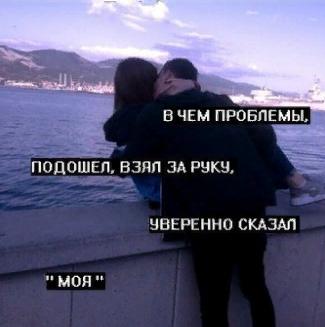
The photo shows two figures from behind at a stone parapet: one person in a dark jacket hugs the other, and both are turned toward the water. Beyond them is a pale expanse of water; to the right, in the distance, a large ship stands, and a hilly shore with buildings is visible on the horizon. The picture looks like an ordinary city embankment shot, and no faces are visible.
Across the image, in white letters with a dark outline, the phrase is set over several lines: “WHAT’S THE PROBLEM?”, “WALKED UP, TOOK THEIR HAND”, “CONFIDENTLY SAID”, and at the end, separately and in quotation marks, “MINE.” The text is split so that the last word reads as an unexpected finish.
Where the text came from
The origin of the phrase is not established. It is a short quote in the spirit of “statuses” and captions for personal photos, and such texts usually circulate from hand to hand without an author’s name. So neither the person who wrote it nor the first place it was published can be named.
The point of the joke is that the question “what’s the problem?” sounds not like a challenge but like a businesslike clarification, and then the protagonist claims the other person with a single word. The reader fills in the missing part of the story, and it is this understatement that makes the text universal.
Why the phrase became a picture
The meme is dated to 2018. This period coincides with a wave of images in which a quote is laid over any suitable photo, but who first paired this exact photo with this exact text is not confirmed by open sources.
The format is simple: the text is broken into lines, and the photograph supplies the emotion and the pause. The viewer sees the figures by the water and fills in the story for themselves, so the same picture can read as tender or ironic depending on the words placed over it. What matters is that the photo shows ordinary people with no faces visible, so the joke stays on the formula, not on the people in the frame.
Three captions in the same logic
Example 1. “What’s the problem? Walked up, sat in my seat on the bus, confidently said: ‘It’s already taken.’” The joke flips expectation: the question and the ordinary phrase sound polite, while the result turns out to be unexpectedly self-assured.
Example 2. “What’s the problem? Walked up to the group chat, opened the spreadsheet, confidently said: ‘Mine.’” Here the logic of claiming moves into the workplace, where everyone argues over shared resources, and the laugh comes from a recognisable situation.
Example 3. “What’s the problem? Walked up to the coffee line, took the last croissant off the counter, confidently said: ‘Mine.’” The absurdity is pushed to the limit: the serious intonation does not match the trivial cause, and it is this gap that makes the caption funny.
All three examples share one mechanic: a calm question sets up the expectation of a conversation, and the final word abruptly turns it into a claim of ownership.
How to read the template
The main device here is tempo. The phrase is read line by line, and the pause between “confidently said” and the last word decides everything. If the caption becomes long, the joke loses its punch, so it is better to keep one unexpected word at the end.
For a meme like this it matters not to overload the photo with extra captions: the figures by the water already set the mood, and the text only nudges the viewer toward the right intonation.