Shoes instead of the expected question
On June 14, 2015, Brandon Moore, who went by Young Busco on social media, posted a short video on Instagram. Filming a police officer, he loudly asks “What are those?” and points the camera at the officer’s black work boots. Literally this means “What is that?”, but the drawn-out intonation turns an ordinary phrase into an astonished comment on someone else’s appearance.
The author stands behind the camera, and the subject of the recognizable portrait becomes the person he is addressing. The phrase was already used in casual jokes about footwear; its use was recorded online as early as 2011. But it was the short 2015 clip that gave it a voice, a camera movement, and a scene that other users could reproduce almost without preparation.
On June 18 the clip was reposted on Vine by A-RODney King. Then came original pranks and musical edits: Danny Gonzalez, for example, combined the phrase with a scene from Jurassic Park. That summer the question was voiced at a meeting with Michael Jordan, and in the 2018 film Black Panther, Shuri used it while looking at T’Challa’s shoes. These are separate continuations of the joke that differ from the original police video.
The portrait before the camera moves
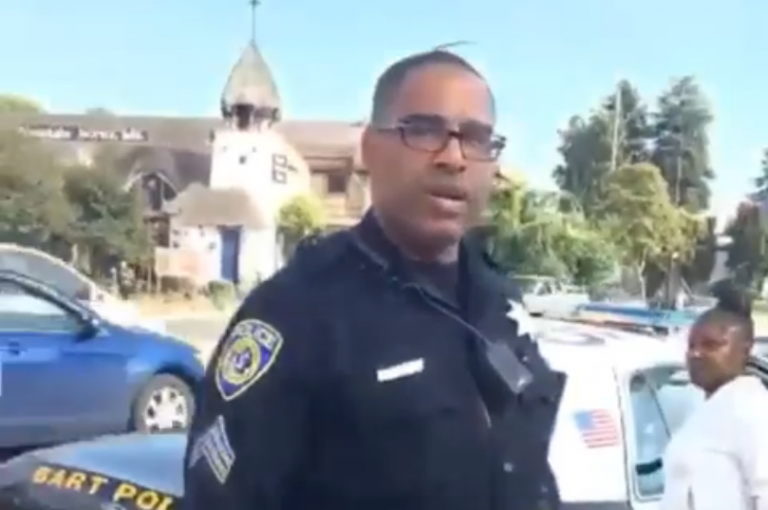
The picture shows a man in a dark uniform and rectangular glasses looking toward the person filming. A BART police patch is visible on his sleeve. Behind him are cars, trees, and a pale tower; to the right stands a man in a white T-shirt. The frame keeps the street setting and direct contact with the camera, but the boots did not make it into the shot.
So here the memory of the clip does the work: the viewer imagines the movement downward and the famous question. The officer himself does not say the meme line. This difference matters especially for first-person captions: the photo can signify a person who has been caught off guard, while the off-screen voice signifies a friend who has suddenly noticed an unusual detail of clothing.
How the question becomes a reaction
The format has two linked parts: loud surprise and the specific object that provoked it. Footwear often becomes a reason for teasing, but in a friendly context that intonation can also express cheerful admiration for a deliberately unusual item. The relationship between the participants and the caption sets the meaning; the English phrase itself guarantees neither praise nor insult.
In remixes the question easily shifts to the enormous boots of a cartoon hero, a ridiculous game item, or unexpectedly festive clothing. The result is an instant change of scale: the viewer expected a discussion of the whole situation, but the boots took over the attention. The recognizable voice serves as a sound button signaling that an exaggerated assessment of a small detail is about to begin.
A standalone photo has a slightly different task. It conveys well the pause of a person who has not yet understood why the conversation suddenly turned to his wardrobe. If you show the object of discussion alongside it or name it in the caption, the missing camera movement is restored even without video.
Invented reasons to look down
In a made-up example, a friend arrives at a hiking meetup wearing huge fluffy slippers: he packed his real boots in his backpack and has not changed yet. The picture with the question marks the moment the group notices the mismatch between route and footwear, even though the explanation turns out to be entirely mundane.
Another invented scenario involves a game. A character gets rare boots that increase speed but look like two glowing teapots. The caption “Stats are great, talking to the squad is tough” turns the phrase into a reaction to the conflict between usefulness and appearance.
In a third invented scene, a person ceremoniously presents a costume for a home play, and a small audience member is the first to notice the dinosaur socks. The meme conveys an unexpected change of topic: they meant to discuss the crown and the cloak, but the simplest things became the main event.