An author’s experiment in summer 2018
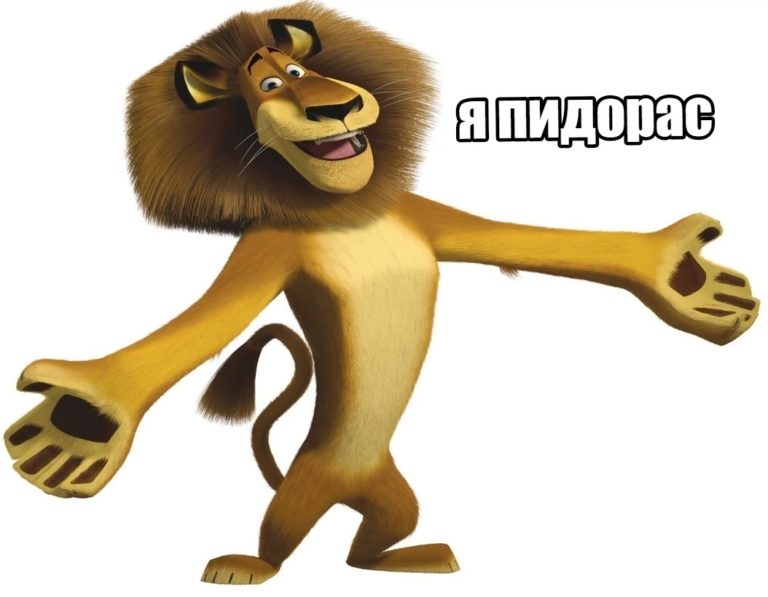
The history of the macro is tied to Yuri Popov, administrator of the community “Forsim Khuynyu” (roughly “Hyping Bullshit”). In discussing the image’s origin, he said he wanted to test whether a meme could spread while meaning almost nothing. By his account, he chose the familiar lion Alex, found a suitable illustration, and quickly came up with a caption. The image was published in the new community on July 29, 2018; to promote it, Popov bought ads in other public pages. This is the account of a participant in its creation, not a reconstructed history of the cartoon itself.
Success depended on persistent repetition of one combination: the same picture returned in different variants and turned into a recognizable password. The author specifically said he did not intend it as a direct answer to a similar macro featuring Dwayne Johnson. Later, viewers still compared such absurd self-definitions. The original authorial intent and the audience’s associations can diverge: for a repeated joke, a recognizable pose is already enough.
Lion with open paws
On a white background, Alex stands nearly full-length, spreading his front paws wide with palms toward the viewer. A thick brown mane, a tail, a golden body, and an open smiling mouth are visible. To the right of the head is a short inscription in black letters with white interiors. The combination is a promotional illustration of a DreamWorks character with added text. The line does not appear in Madagascar and is not a statement about the lion’s canonical character or sexuality.
The gesture resembles presenting oneself on stage: the hero doesn’t justify himself but happily announces who he is. The white space removes the circumstances that might explain the confession, so it has to be understood from an adjacent message, the previous comic panel, or the sheer unexpectedness of its appearance. The more solemn the setup, the more sharply the register drops when a short, crude phrase appears.
The ending that doesn’t answer the question
The macro doesn’t follow the usual logic of “made a mistake, repented.” It can be inserted after a completely neutral conversation, as if the character suddenly stepped out of another story. In that case, the humor comes from refusing the expected response: the viewer braces for a reason, a decision, or an explanation and gets an absurd self-declaration. The rude word remains rude, but its narrative role belongs primarily to the unexpected shift of voice.
When the picture is used in the first person after a failure, the open paws create a different tone: the person preempts others’ judgment and deliberately accepts defeat. This reading has a concrete reason; the abstract version may have no reason at all. These uses explain why the same image appears both in story comics and as a standalone reply.
Three invented outcomes for Alex
In a comic, a person prepares a serious self-presentation, rehearses for several pages, and steps up to the audience, and the final panel is Alex. The absurd brevity cancels the prepared speech. In another storyline, friends wait for an explanation of who ordered five identical notebooks, and the culprit sends the picture instead of an answer. Here confession replaces justification, and the wide paws add a provocative frankness.
A third example uses a softer caption, “I mixed everything up”: the hero starts a series from the last season and solemnly announces that he has already grasped the ending. Changing the text preserves the comic self-introduction but weakens the provocation. The choice between the original formula and the rewrite changes the tone of the reply; the pose stays confident even when its owner announces his own failure.