A phrase from the cartoon
Lightning McQueen is the main character of the Pixar feature animation Cars, released in 2006. Before a race he repeats a short mantra to himself, “I am speed,” like an athlete getting ready at the start line. The phrase sounds like a motto: it contains no arguments and no doubts, only confidence in oneself.
What matters is that the hero says these words about himself. The caption in memes carries this self-confidence into everyday contexts, and the viewer immediately sees the comedy. That is why the format is understood even by people who have not seen the cartoon: it is enough to catch the tone of a person who is convincing himself and everyone around him.
How the meme appeared in 2019
The phrase became a meme in March 2019. One of the earliest known versions appeared on March 18, 2019, on Reddit in the r/dankmemes community: a promotional still of McQueen was accompanied by a joke about a long stay in the bathroom, delivered through blacked-out text. This post gathered more than 26 thousand points in two days. It cannot be confirmed as the first publication, and the author of the format in the broad sense remains unidentified.
The format spread quickly. The next day versions about downloading games on Steam and about a hamster appeared, and then the template began living in communities on its own, changing only the caption. The secret of such speed is simple: a joke is assembled in seconds, and the frame is recognizable at first glance.
What is visible in the frame
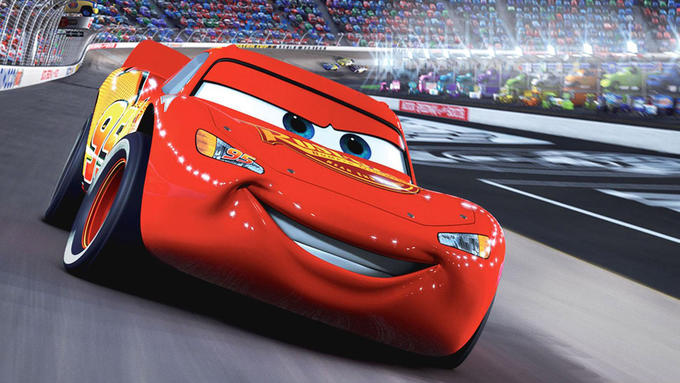
The picture shows a red car with large blue eyes and a wide smile racing along a track. The body is slightly tilted, and the car looks straight at the viewer. On its side there is a yellow design and the number 95, and white highlights gleam on the hood and the front. The background is blurred: the stands are full of spectators, floodlights glow in the distance, and white track markings are visible on the right.
The frame works through contrast. The hero looks very pleased with himself, while the motion and the crowd in the background create the feeling of a real race. That is why any caption about speed, quickness, or superiority reads as ironic: the expectation of a great feat meets a small everyday situation.
The red body occupies the center of the frame and nearly all of the composition's visual weight, so even a short caption catches the eye quickly. The diagonal of the track and the tilt of the car emphasize the motion that the caption then describes in words.
Caption examples
“I am speed, but on Monday without coffee” — self-confidence combined with an everyday caveat. It is funny because the hero doesn't doubt, while the viewer knows the morning hasn't started yet.
“I am speed, when I'm downloading a 40-gigabyte game” — the claim sounds like a feat, while the reality comes down to waiting on a progress bar. The contrast between the scale of the words and the slow process explains the joke.
“I am speed, but it takes me three minutes to find my keys” — confidence turns into self-irony. The phrase becomes a confession rather than a boast.
“I am speed, until the word ‘urgent’ appears in the chat” — in this caption the hero loses his pace exactly when he should be building it up, and the pause before the end of the phrase plays the role of a second frame.
How to change the text without losing the meaning
Keep the first-person structure and the short formula. As long as the phrase sounds like a statement, the frame works. If the text turns into a description of a situation, the template is no longer needed: the self-confident intonation that everything rests on disappears.
Don't stack several comparisons in a row: one thought in one line gives the best effect. If you want to strengthen the joke, change the expectation rather than the number of words. The most successful variants break the claimed speed in the last two or three words.