Who and what is depicted in the picture
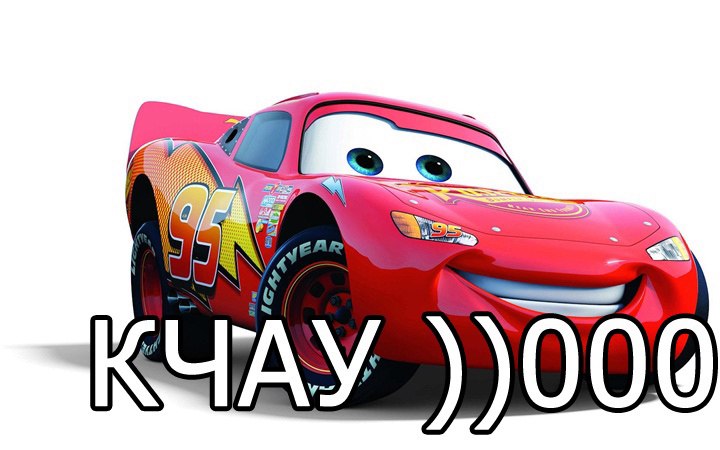
The frame shows a red race car with the number 95 on its side and a lightning bolt on the door. It has large eyes on the windshield and a wide smile on the bumper. It is a three-dimensional animated character, shot slightly from the side against a white background. At the bottom, in large white letters with a black outline, is printed “KCHAU ))000”: the brackets and zeros imitate the laughter and delight people type in chats.
The picture is built like a simple caption under the frame: the image is recognizable, and the text directly suggests what sound the viewer hears. This device works even if a person does not remember the plot of the cartoon: a red car with eyes and the caption “kchau” read as the exclamation of a smug hero.
The phrase from the cartoon
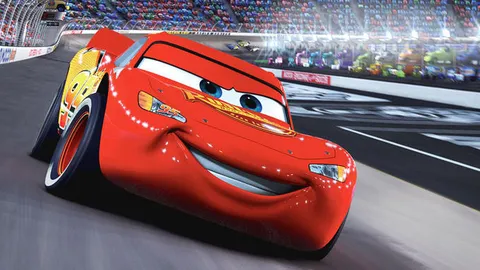
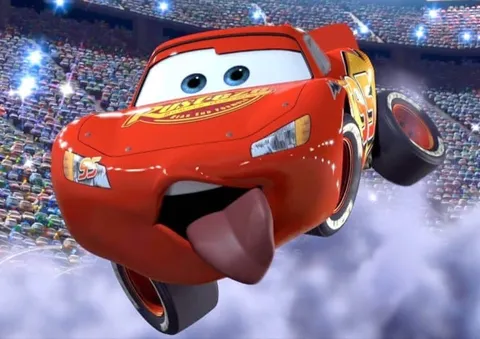
Lightning McQueen is the main character of the Pixar cartoon “Cars,” released in 2006. At the start of the film he is a self-assured young racer who believes he doesn't need anyone. The exclamation “ka-chow” is his signature line: it sounds like a click or a “shot” and accompanies the hero's self-assured gestures.
That is why the word easily turns into a reaction. The sound itself means nothing, but the viewer associates it with the image of a confident hero. A single word is enough to convey a whole set of emotions: pride, bravado, the desire to impress, and a touch of naivety.
How the phrase spread online
According to reviews of English-language meme catalogs, the earliest pictures found with this phrase date to 2015 and were posted on meme pages on social networks. A noticeable rise came in the summer and autumn of 2016, when variants with the character became popular on iFunny, Instagram and Reddit.
By then the captions had grown more complex: the exclamation began to be used as a reaction to an attempt to talk to someone you like, to a small victory, or to a self-assured act. These dates show that the meme grew gradually: at first people joked with short captions, and later moved on to more complex scenarios. Such dating marks only the earliest examples found, not a proven first publication.
Spelling variants
In English-speaking circles the variants Ka-Chow, Kachow, Kerchoo and Kootchow occur: the distorted spellings appeared in 2016 and reflect how the sound is heard by ear. Some of them became separate captions in which the word is deliberately pronounced differently, to emphasize that the joke has already become a repetition.
The Russian spelling “kchau” has taken root in captions on pictures and in chats. Additions like “))000” repeat the style of early internet comments, where brackets stand in for a smiley and zeros show mounting laughter. Who first started writing it this way is not known, so it is best to rely on the sound itself and the recognizable hero.
Examples of captions and why they work
Below are three independently invented captions. All of them use the same device: a confident exclamation enters an everyday situation.
“Sent the report to my boss a minute before the deadline. Kchau.” The caption turns ordinary work correspondence into the victorious finish of a race. The contrast between a dull task and a loud exclamation produces the laugh.
“Five minutes ago I wanted to go to sleep. Now I'm kchau.” Here the phrase describes sudden resolve: the viewer recognizes themselves in the moment when, after long hesitation, a person suddenly gets down to business.
“Got off the bus at the right stop on the first try. Kchau.” A small success is presented as a loud victory, and the hero's self-confidence matches his character from the film.
How to use the picture
The frame works well in replies to short news items and in situations that call for a quick, confident reaction. It is important that the caption does not go beyond the joke: the vocal exclamation does not need explanations by itself, and extra words only slow down the effect.
For a caption it is useful to take one situation and one moment. If the text stretches over several phrases, the effect fades and only an explanation of the hero remains. A separate device is to use “kchau” as a reaction to someone else's message: the picture then becomes an instant wordless reply, and the caption at the bottom makes it readable even without knowing the cartoon.