What the image shows
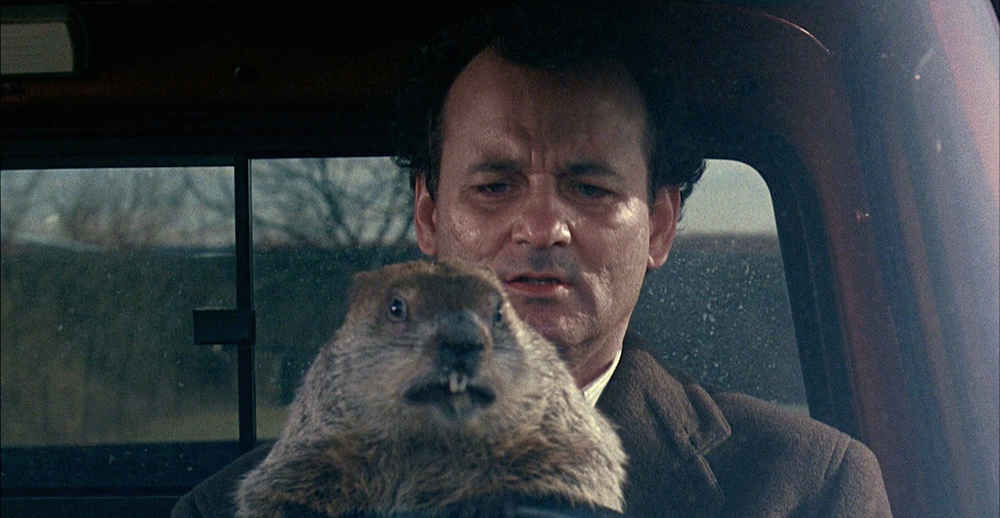
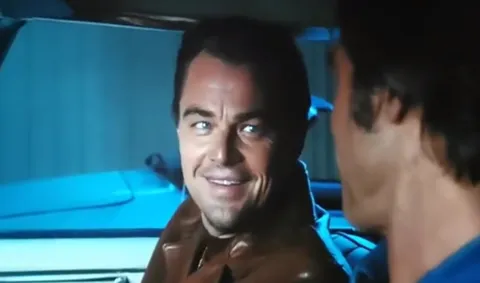
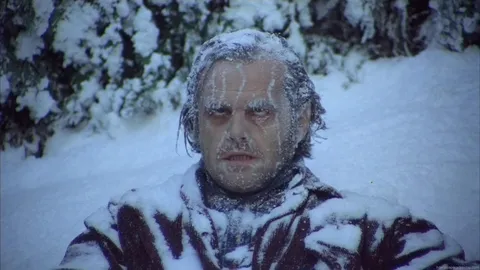
The frame shows a man in a dark coat sitting in a car and looking at a groundhog he holds in front of him. Bare trees and an overcast landscape are visible through the glass, and the hero's expression is bewildered. The scene looks like a moment of puzzlement, when a man doesn't understand what is happening and tries to make sense of the situation. This is a cinematic frame, not a photograph of a holiday ceremony, so the image is tied to the film's plot rather than to the holiday itself.
The holiday
Groundhog Day is observed on February 2. The tradition goes back to the folk custom of Candlemas: people predicted whether spring would come early or late based on the animal's behavior that day. In German tradition the role of the forecaster was played by a badger, and settlers brought the custom to Pennsylvania, where it took root. The best-known place for the celebration is the town of Punxsutawney. The local groundhog club has held the ceremony since 1887 and announces whether the groundhog saw its shadow. If it did, the folk belief goes, winter will last another six weeks. The holiday is traditionally observed in the United States and Canada, and outside North America it is known mainly thanks to the film.
The film
Groundhog Day came out in 1993, directed by Harold Ramis, with Bill Murray in the lead role. Murray's character, a cynical TV weatherman, travels to Punxsutawney to cover the holiday and finds himself in a loop: every morning is the same February 2. The plot became a model for jokes about a repeating day, and the figurative use of the phrase “groundhog day” comes from it. The film won critical acclaim and has since often been cited as an example of a comedy in which the hero changes through repetition. That idea is what made the picture recognizable to viewers with no connection to the holiday calendar.
The expression in Russian
In Russian, the phrase “день сурка” (roughly, “groundhog day”) describes a situation in which the same thing repeats without change: the same work, the same conversations, the same mornings. The meme carries this meaning over to everyday situations. An illustrative caption such as “Monday, planning meeting, the same report again” under the frame conveys the meaning precisely. Another variant: “Opening the same chat with the same problem again,” and the picture reads at once. In this way the image of the film replaces a long description of routine and makes the joke understandable without explanation.
Why the image endures
The frame is recognizable, the plot is known to a broad audience, and the expression is short. The film's plot doesn't need direct irony: the hero is bewildered, and the viewer grasps his situation without hints. The image works both for jokes about stagnation and for nostalgia for stability. The groundhog itself is harmless and not tied to mocking people, so the meme moves easily between contexts, from work to personal life, without causing discomfort. The image stays useful precisely because it describes repetitiveness rather than a specific event.
What is worth clarifying
Sometimes people say the holiday has “spread all over the world.” It would be more accurate to say that it is observed mainly in the United States and Canada, and outside them it is known chiefly through the film. The description of the hero as a weatherman is accurate, as is the year 1993, which matches the film's release year. The image is a still from the film, so for an accurate description of the source it is useful to name the film rather than the ceremony.