Who's in the photos
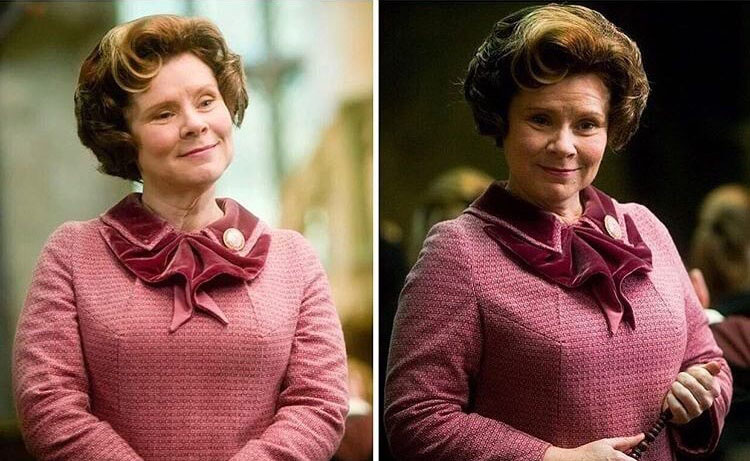
The picture is made up of two stills. In the left one, a middle-aged woman stands in a bright room, with a blurred window visible in the background. She has short, curled chestnut-colored hair, her head tilted slightly, and a soft smile. She's wearing a pink knitted suit with a velvet bow at the neck and a round brooch.
In the right still, the same character is in the same outfit, but in a dimly lit room: she holds something dark in her folded hands, her face is pushed slightly forward, and the smile stays the same. This is Dolores Umbridge, a character from J.K. Rowling's books and the Harry Potter films, played in the movie version by Imelda Staunton. The character's outward cuteness is exactly what the joke is built on.
The template's formula
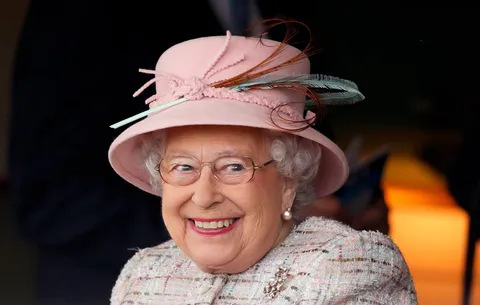
The phrase "If 2020 were..." works like a building kit. After "were," a noun gets slotted in: a drink, a dessert, a person, a TV episode, a music genre. Then comes a precise and biting answer. This is a comparison, not an argument: the meaning arises from the match between the image and how the year felt.
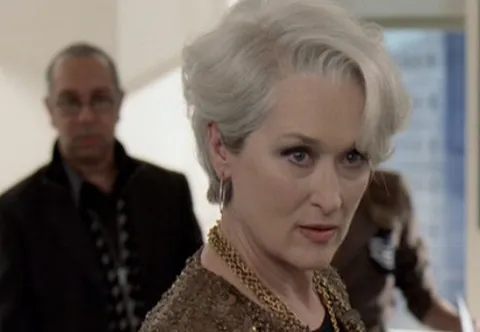
The same scheme works in "who would X be" questions too, except there a person or phenomenon gets slotted in instead of a year: both templates rest on the same trick — an unexpected but accurate comparison in place of a direct explanation.
When the wave started
According to English-language sources, similar questions were being asked before the pandemic too, but the real surge came in 2020: the grimmer the news got, the more eagerly people searched for a fitting image for the year. The exact date of the first joke can't be pinned down, and individual popular posts spread over the course of spring and summer.
The "if 2020 were a person" version featuring Dolores Umbridge turned out to be one of the most recognizable takes on this template, because the character's image explains the question instantly, with no words needed.
Why Umbridge specifically
The character is memorable for combining saccharine politeness with cold cruelty: in the story, she takes a position at the school, introduces pointless bans, and punishes students. In that role, the year looks just the same: it smiles, explains the rules, but brings restrictions and unpleasant consequences.
The pink color scheme of the outfit underscores the resemblance. The more pleasant the wrapping, the stronger the contrast with the content, and the more precisely it captures that feeling of "respectable" horror that many users were trying to convey.
Captions
"Smiles — and sweetly announces there's no vacation this year." This caption gets used even without mentioning the year at all: Umbridge's face finishes the joke on its own.
"Promised everything was under control — then cancelled absolutely everything." The friendly tone of the first clause and the bluntness of the second repeat the template's main device: a soft form and harsh content.
"If 2020 were a cup of tea: sweet on the first sip, bitter dregs at the bottom." The comparison is transplanted onto a different category, but it rests on the same contrast between a pleasant surface and an unpleasant outcome.
"If my Monday were a person." The template can easily be transplanted onto any unpleasantness that has nothing to do with 2020.
How to use it
Comparisons with specific images that a broad audience will recognize work best: the clearer the association, the less needs explaining. Don't try to turn real tragedies into funny metaphors unnecessarily. Use the template for a general sense of a bad stretch of time, not to lay blame on specific people. Feel free to use it for other years too, if needed: the formula is universal.
The two halves of the picture can be read as "before" and "after": on the left, a still-calm smile; on the right, the same smile, but now with a threat clutched in her hands. For captions about a deceptively peaceful start to a month or a project, this is a handy device.