A song about memory, not just a nostalgic slogan
Monetochka’s “That Was in Russia” is on the album “Prayers. Jokes. Toasts.” (Molitvy. Anekdoty. Tosty.); the official video appeared in June 2024. The verses list small memories: familiar places, awkward childhood tumbles, a first crush, the walk home from the movies. The chorus turns these details into the formula “which means it was long ago.” The lyrics also touch on the heavier theme of leaving: the narrator cannot go back to what she remembers and hears a different language on the old streets. That is why the song reads as personal nostalgia rather than a carefree postcard about a country.
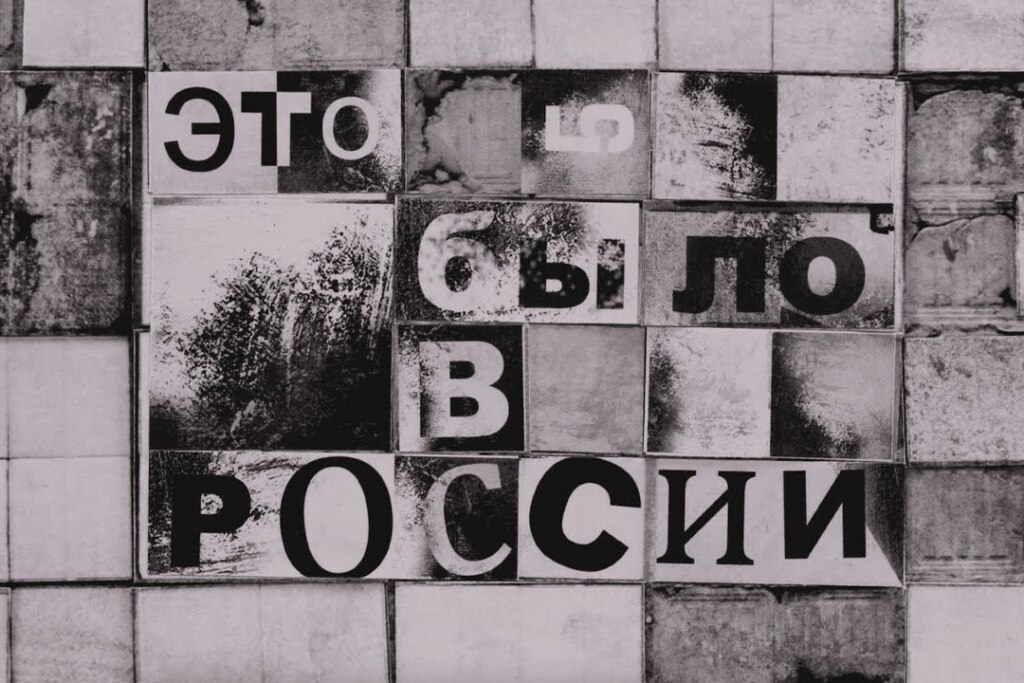
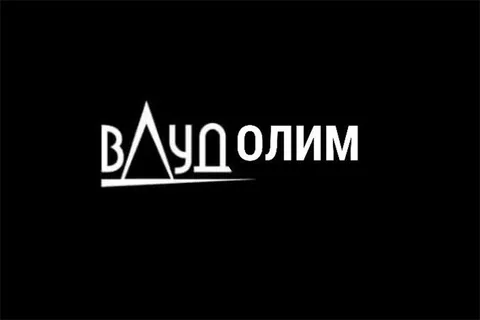
The local image is a black-and-white mosaic with large letters spelling the title. It does not show the singer or any specific historical scene; it is a typographic illustration of the title and of the song’s themes of memory. In trend videos the song is used as a soundtrack for personal photos and clips, sometimes with the user’s own associations added. Such use broadens the song’s meaning, but an individual user’s caption is not part of the author’s lyrics.
Why the phrase joins the personal and the historical
The formula sounds both specific and vague. It can refer to a childhood courtyard, a long-closed shop or a major social upheaval. The first half promises a memory, and the second immediately pushes it into the past. Because of this, a simple everyday detail takes on a shade of loss: it used to be close, and now seems separated by time and distance. The song does not claim a universal experience for all listeners; its strength lies precisely in the fact that everyone can fill in their own memory.
The mosaic lettering in the image reinforces the device: the title is assembled from separate visual fragments, just as the past is assembled from scraps. The black-and-white contrast makes the lettering stand out but does not turn the picture into a literal archive. It is graphic design, not evidence of any particular era.
Three caption ideas
For an old photo of a bus stop: “That was in Russia — the ice-cream line after school, which means it was long ago.” A small detail sets off the viewer’s own memory and matches the song’s tone. For an emigrant’s diary you could write: “That was in Russia — what my dad called this intersection; now I explain it with gestures.” Here the caption points not to politics in general but to an everyday change of language and place.
A version without the sadness: “That was in Russia — my first pie that didn’t burn. Which means it was long ago, but the recipe survived.” The famous line becomes gentle self-irony about a skill acquired. These wordings were written as examples and are not quotes from Monetochka.
How to use the song in a video
You can pair the song with family photos, shots of a familiar neighborhood or short clips of everyday small things. There is no need to illustrate every line literally: a single concrete detail tied to a recognizable feeling works better. If you want to use the trend ironically, keep the scale modest — a funny memory about a school uniform or first earbuds does not cheapen the song’s more serious meaning.
The song touches on the memory of leaving and on a politically changed place. Do not assume all emigrants react the same way, and do not reduce the author’s personal memories to a slogan. If you use footage of other people or a family archive, ask permission; be especially careful with children’s photos. A short caption works better when it leaves the viewer room for their own story.