What's visible in the frame
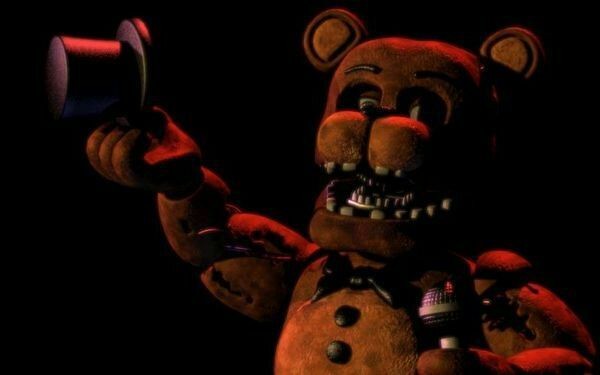
The background is almost black, with light falling so that only the bear is visible. It has brown fur, round ears, a wide toothy grin, and eyes that seem not to look straight at the viewer. One arm is raised, holding a top hat; its chest has a bow tie, buttons, and a microphone. The fabric looks torn and dusty, and the seams on its paws are visible.
This is a computer-generated image, not a photograph, and it's clearly styled after shots from the games in the series. Even so, a single picture can't tell you exactly which installment it's from or which version of the character is shown, so here we'll just say: this is a bear resembling Freddy Fazbear.
The game that spawned the image
The "Five Nights at Freddy's" series is an indie horror franchise by Scott Cawthon. The first game came out in 2014, and the second appeared later that same year. The player sits as a night guard at a pizzeria, watches the security cameras, and has to survive the shift while the animatronics come to life and try to reach him.
Freddy Fazbear is the main mascot of this fictional pizzeria: a big bear with a top hat, a bow tie, and a microphone. The second installment introduced "worn-out" old versions of the animatronics. The series' plot details are complicated and convoluted, and none of that is needed to understand the meme.
How the image became a meme
The exact moment Freddy turned into a Russian-language meme is unknown. Variations of the name, like "Mishka Freddy" or the garbled "Mishk Frede," sound like a joking, almost childlike mangling of the name; when they first appeared is unknown. The year 2021 is usually tied to the period when the joke gained popularity, not to the date the game came out or the first video was made.
The game itself plays an important role here: the scene where a familiar silhouette suddenly appears out of the dark has been retold and mocked so often that the image now works as shorthand. Just showing the bear is enough to bring back the tense feeling of watching the cameras.
How the joke works
The humor here comes from mismatch. The affectionate "teddy bear" sits alongside a frightening appearance, and an everyday situation takes on the scale of a nightmare. On top of that, everyone knows Freddy will attack exactly when you turn away — so any unpleasant event can be pictured as his inevitable visit.
The second thread is instant recognition: torn fabric, a top hat, and a microphone register immediately with anyone who's sat through a night shift watching the cameras, and a single silhouette like that in the dark is enough to bring back the exact same dread the game gave you.
Example captions
"Me at three in the morning when mom said something's rustling in the fridge." The frame adds a game-like atmosphere to an ordinary everyday fear.
"The 6:30 alarm emerging from the dark." An unpleasant event is framed as an animatronic attack, and the pause between sleep and getting up plays the role of that same night shift.
"The boss, when he wrote: got a minute?" This works on dread of anticipation: the viewer recognizes that familiar feeling of waiting for trouble.
"Mishka Freddy came out on stage to say there's a test tomorrow." What's funny here is the solemn delivery: the raised hat looks like an invitation to a show.
How to use the picture
Caption the anticipation, not the image itself: a dark room, silence, an inevitable event. The picture works better without extra text, with one short phrase. It's better not to amplify the scary details: the meme stays a joke as long as the fear is funny rather than real.