The sound and the image
'Kukareku' is a short fragment associated with the singer Margo (Margarita Ovsyannikova) that became recognizable in Russian-language short-form video over the summer of 2025. Posts discuss a snippet with a repeated rooster-crow sound rather than an established full song with a long history. The exact first video that launched the meme hasn't been reliably established: the sound's early spread and its subsequent circulation through user-made clips are hard to trace to a single point.
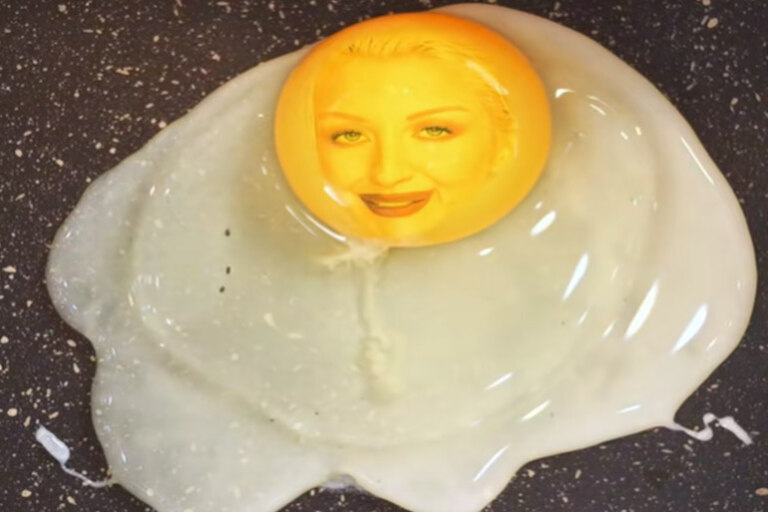
The picture shows a frying pan with egg white and a yolk, into which a smiling face has been edited. This turns the rooster's crow into a literal scene: as if the egg itself started crowing. The visual version can coexist with clips that use the audio, but it's not a documentary shot of a performance and shouldn't be taken for an actual photo of food.
Where the comedy comes from
The format builds on several leaps. First an ordinary breakfast becomes a stage, then the yolk turns into a character, and the short word 'kukareku' gives it an absurdly fitting voice. The more serious or mundane the situation in the caption, the more the absurdity stands out. The fragment's recognizability adds a second layer: the viewer isn't just laughing at the egg, but also at how an insistent sound suddenly accompanies anything at all.
Virality on its own doesn't mean the audience rated the vocal or the song as a piece of music. A memed sound can live independently of the artist's intent and get used for its rhythm, its recognizability, or its deliberate absurdity. So it's more accurate to speak of the popularity of this specific fragment and image, without claiming there's a single authorial reading of the joke.
Caption variants
'When I set the alarm for sunrise, and breakfast already started rehearsing' — here the egg's voice becomes an extension of the morning chaos. 'I just asked for fried eggs — and got a yolk with an opinion and a voice of its own' fits the picture directly: the caption promises a simple dish, and the image breaks that expectation. 'My brain after three cups of coffee: even the yolk on my plate is looking at me now, clearly about to let out a "kukareku"' transfers the absurdity onto the state of someone who hasn't woken up yet.
Each example spells out one specific link between the caption and the picture: a sudden sound, an unusual yolk, or morning grogginess. Just repeating 'Kukareku' lets the viewer recognize the audio but gives them no extra twist. A good caption doesn't fully explain the meme — it adds a new everyday situation to it.
When 'Kukareku' fits
The meme works for a light exchange about breakfast, waking up, an unexpected song stuck in your head, or a video that's hard to unsee. It's best sent to people already familiar with the trending sound: without that reference, the unusual fried egg might just look like a random photo edit. It also works as a reaction to a repeating phrase that unexpectedly resurfaces in memory at an inconvenient moment.
The image is obviously edited, so it shouldn't be passed off as a documentary shot, a news fact, or confirmation of anyone's words, and the music snippet is best kept separate from rumors and judgments about the artist's personality: the meme runs on play with form and repetition, not mockery of her appearance.