Why people started talking about GDPR in May
The General Data Protection Regulation, the European Union's general regulation on personal data protection, was adopted in 2016 and began to apply on May 25, 2018. Before that date, many services sent messages about changes to the rules for handling personal data or asked whether people wanted to keep receiving emails. For users, the legal reform often looked first of all like an overflowing inbox: the familiar wording arrived from new and long-forgotten senders.
The jokes began spreading in the days before the regulation took effect. On Twitter, the usual question about continued mailing was transplanted into photos of meetings and conversations, as if the characters were discussing precisely the email notifications. Other users compared the persistence of services to a person who simply cannot accept a breakup. By the end of May, Russian-language versions also appeared. What united them was the repetitiveness of the message, not a single character or photo: any situation could unexpectedly turn into yet another reminder about privacy.
GDPR as an imaginary party
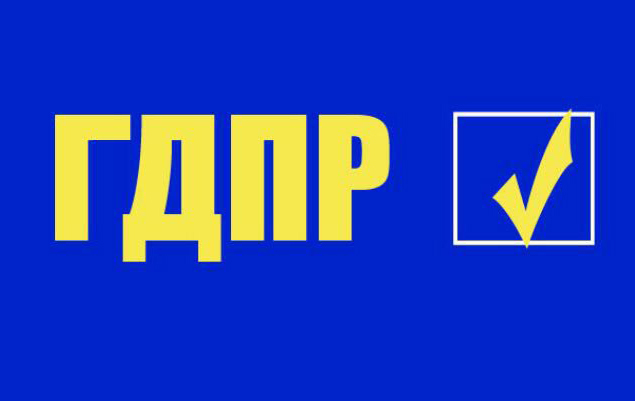
This particular image does without people, computers, and letters. On a blue background, large yellow letters read «ГДПР». On the right is a white frame with a yellow checkmark. The colors, heavy lettering, and sign refer to the emblem of the LDPR party, but the first letter is replaced. The Latin abbreviation of the European regulation has been transliterated into Russian letters and turned into an almost familiar name. The author of this separate remake and its first publication are not reliably established.
The substitution is economical: the design looks familiar until the viewer reads the four letters. Then an imaginary institution appears that seems to have come to run a campaign among email addresses. The checkmark also recalls the consent tick in electronic forms. This is an additional visual reading, not an official symbol of European rules. The combination of the two associations lets the picture work without a long caption: the regulation's name becomes a political emblem and at the same time reminds one of the need to confirm something again.
When an important notice sounds like harassment
Meme logic is built on spreading a single message beyond its normal place. The letter first appears in the inbox, then seems to interfere in a conversation, a dream, or a film scene. A serious topic takes on an excessively insistent form. The comedy comes from the number of encounters, not from any proof that data protection is useless. A person finds it funny to recognize the same administrative intonation in situations where it has absolutely no business being.
The parody logo offers another path: instead of endlessly copying text, it makes the abbreviation an independent character. The imaginary GDPR can speak, promise, seek support, and come back again. Thus an impersonal notice turns into a participant in public life. The viewer gets a clear image of an intrusive sender even without a list of services. The familiar emblem links the distant European name to local visual culture and turns it from a complex term into a short, recognizable word.
Invented privacy campaigns
In an invented poster, GDPR promises: “Every mailbox gets one more important letter.” The campaign-speech tone turns an irritating flood into a solemn gift. Another example uses a family scene: a person asks whether dinner is left, and the fridge replies with a request to confirm receipt of notifications. An ordinary everyday piece of information unexpectedly demands a procedure that the hero already knows all too well from his mail.
The third invented plot depicts a concert: before the musicians come out, the hall receives an offer to agree again to hear the songs. The audience came for one action, but it is briefly replaced by a familiar question. The poster, the fridge, and the concert use different turns: a promise, an animated object, and a postponed event. What links them is the transfer of a recognizable notice into an unsuitable environment. It is exactly this move beyond the mailbox that gave the administrative abbreviation a life of its own as a meme.