The local card and the famous phrase
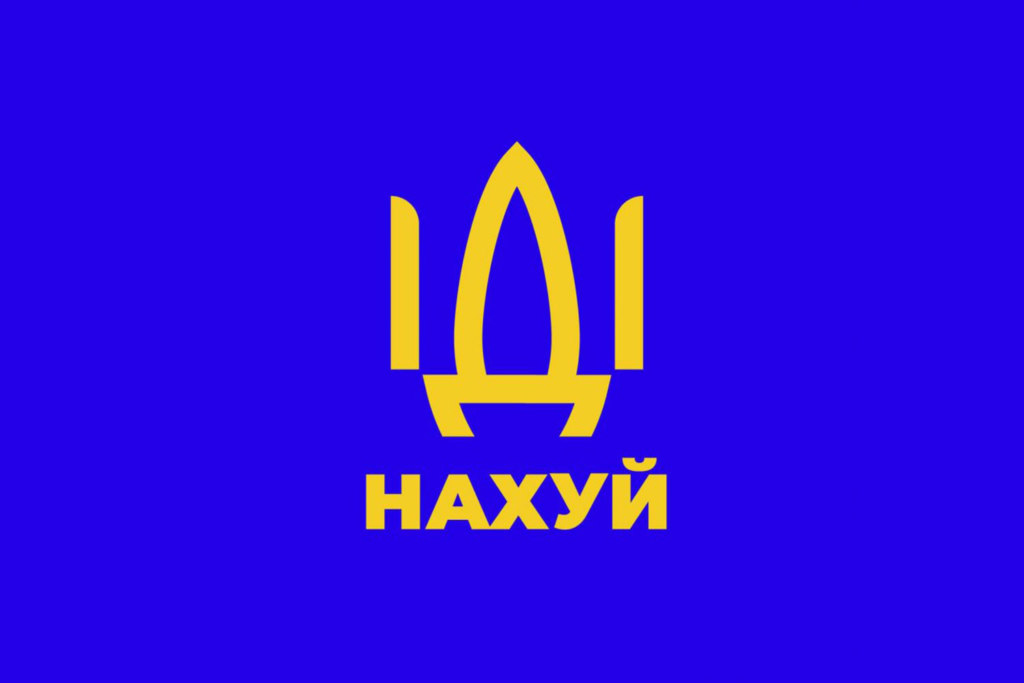
The local picture shows a blue-and-yellow background, the Ukrainian trident and the inscription “Good evening. We are from Ukraine.” The words “Russian warship…” do not appear on the image itself. The entry's title links the file to a separate phrase spoken during the attack on Zmiinyi Island in the Black Sea. This mismatch should be kept in mind: the article tells the story of the phrase, while the image depicts Ukrainian symbolism without presenting it as an original recording of radio exchanges.
The conversation at Zmiinyi Island
On 24 February 2022 a Russian warship demanded that Ukrainian border guards on the island surrender, warning them that fire would be opened. In the recording of the exchange the reply “Russian warship, [expletive]” was heard. It was attributed to border guard Roman Hribov. In the first hours, reports appeared that the defenders had been killed, but Ukrainian authorities later said that some of the servicemen were alive and in captivity. In March some defenders returned in a prisoner exchange. Therefore an early report of the deaths of everyone present should not be left uncorrected.
From radio reply to symbol
The short, coarse reply became an international quotation and a sign of refusal to obey an aggressor's demand. It was printed on posters, stamps, souvenirs and in posts. It acquired many abbreviated and censored variants, but the meaning remained the same: a defiant refusal to surrender. The phrase was not originally composed as a slogan; its fame came from the specific military situation and then from repeated use in public space.
New everyday uses
In a joking context the formula can be aimed at something harmless: “Alarm clock, go… switch yourself off,” if the audience accepts coarse language. Another option: a character refuses an intrusive subscription or a third call from a salesperson. But a strong phrase can sound out of place in neutral correspondence. If the meme's point is historical, do not replace the names of the dead or prisoners of war with invented lines, and do not pass a parody off as an original recording.
Memory and accuracy
An important clarification is that the first reports of the border guards' deaths proved inaccurate: the defenders were taken prisoner, and some returned in subsequent exchanges. Therefore the story should be retold using updated information, even if old memes continue to circulate. The local card does not confirm the moment of the negotiations itself and does not contain its audio. A respectful description acknowledges the phrase's significance, avoiding romanticization of war and the false claim that all participants in the scene died.
The history of this meme clearly shows how quickly news information can change. The first reports included the version that the defenders had died; later the Ukrainian side said they had survived and been taken prisoner. Information about the fate of specific people was updated as exchanges and the return of servicemen took place. If an early post is quoted on its own without subsequent corrections, the reader will be left with a wrong picture of the episode's outcome. Therefore descriptions of old memes should be accompanied by a note that the initial version was corrected.
The short line spread not only as a joke. For some audiences it became a sign of defiance, for others an inscription on souvenirs and a symbolic show of support for Ukraine. The very fact of its popularity does not change the fact that the phrase arose in the setting of an armed clash with a real threat to life. It must not turn into an invented quote from another border guard or serve as proof of unconfirmed details of radio communication. The current illustration with the trident and a different greeting belongs to a broader range of Ukrainian visual symbols, but it is not a recording of that conversation.