What’s in the frame
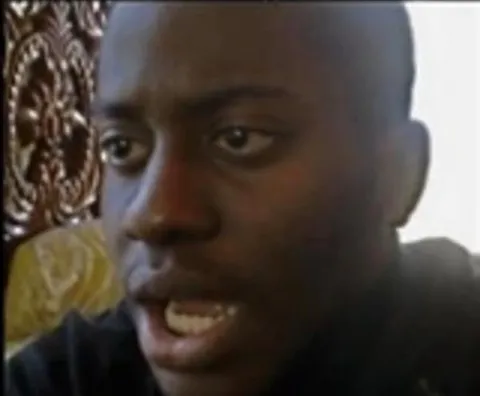
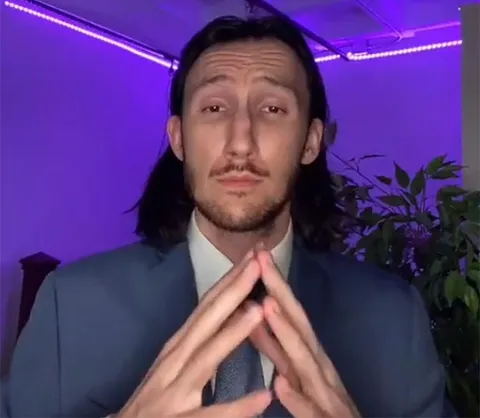
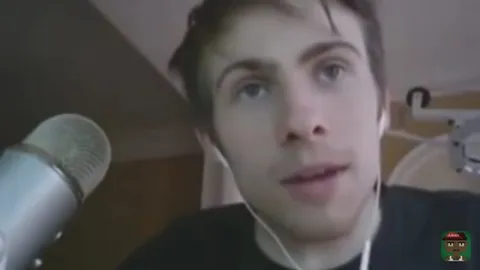
A close-up of a man with turquoise hair and a thick dark beard. He looks straight into the camera with a flat, expressionless gaze. He wears a blue shirt over a black T-shirt. The background is dark wallpaper with a small floral pattern. No smile, no tension: the face is motionless.
It is precisely this stillness that makes the frame a convenient template: any caption can be hung on it, and the gaze will still look like a calm “so what.”
Where the phrase came from
Artemiy Lebedev is a Russian designer and blogger. According to descriptions in Russian-language materials, the phrase “Well, he died and he died” appeared in his video news reviews on YouTube, which he has hosted since 2019: when the death of a well-known person came up in the roundup, he reacted with these words. The video where the first use occurred has not been precisely identified.
As a meme the phrase spread at the end of 2019 and especially in January 2020. Users took the screenshot with the turquoise hair and replaced “died” with other events. The line itself is the host’s reaction to a report of a death, not a statement about a particular person, so this article discusses only the formula.
How the joke is built
The formula goes: “Well, [event] and [event].” The repetition of the verb turns it into a shrug: it states what happened, and that is all there is to say. The surprise is that we expect emotion and get detachment.
The meme works on the contrast between the significance of the event and the tone of the response. The more serious the news in the caption, the stronger the compression of the reaction. But if the caption is about someone’s real misfortune, the joke becomes tactless, so it is better to choose everyday and absurd occasions.
In chats the formula often becomes a game: one participant names an event, and another replies “well, [event] and [event].” Thanks to the repetition the word loses its weight, and that is exactly why the joke feels like a light shrug.
Caption examples
“Laptop died at five percent” — “Well, died and died.” A minor everyday misfortune to which you react philosophically.
“The show was canceled after the first season” — “Well, canceled and canceled.” A familiar disappointment delivered with a show of calm.
“The cat knocked a mug off the table” — “Well, knocked and knocked.” Funny because the cat always does this, and the protest is long over.
“Deadline is tomorrow” — “Well, tomorrow and tomorrow.” Exaggerated calm where one is supposed to panic.
When to use it
The meme suits situations that have already happened and cannot be fixed: broken plans, canceled flights, breakdowns. Then the calm of the frame genuinely looks like wisdom rather than indifference to people.
It is better to avoid captions about real tragedies and the deaths of real people: the original is built on the host’s calm, not on mocking those close to the victims. If you need to choose the verb, pick one that denotes a trifle.
A variant also works where the repeated word refers to the author’s own behavior: “well, overslept and overslept.” Then the indifference is directed at oneself, and there is no awkwardness toward other people.