What is shown in the picture
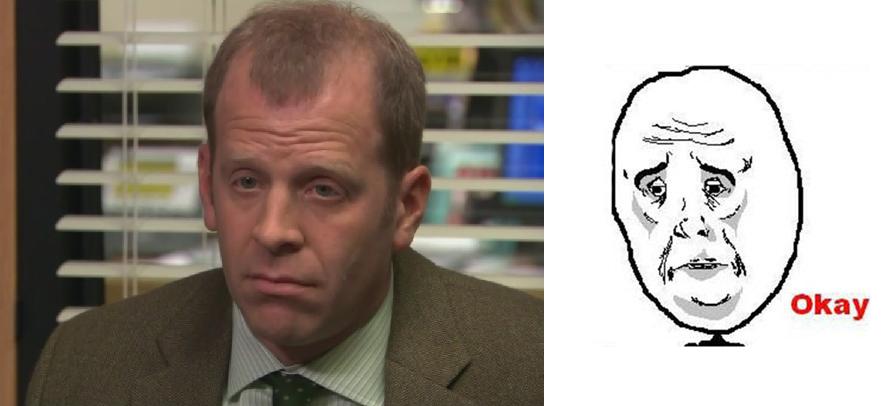
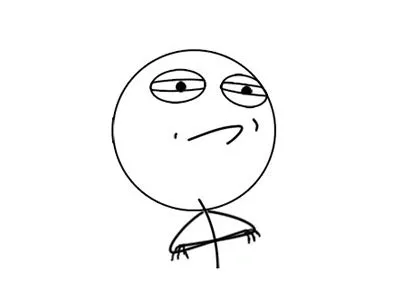
The drawing shows an elongated head with heavy eyelids, downturned corners of the mouth, and deep wrinkles on the forehead and under the eyes. The expression is sad and submissive, like someone who has long since come to terms with bad news. Next to it, in red, is the word "Okay," which serves as both the caption and the meme's name.
The drawing is done in the rage faces style: black lines on a white background and minimal shading create a gloomy image. In popular versions of the meme, the drawing is paired with a frame from the American sitcom The Office, in which the character Toby Flenderson looks almost equally downcast. The comparison became the basis for many macros in which the photo and the drawing work together as a pair.
Thanks to the character's simplicity, it's easy to redraw and adapt, and the red caption grabs attention right away, even when the image is shrunk down to thumbnail size.
Origin story
The meme's origin hasn't been pinned down with certainty. There's a theory that the character appeared on 4chan, but no archived thread confirming this has been found. The earliest known mention dates to June 24, 2009: the character was posted on the Russian-language humor site Joy Reactor. The artist behind the drawing has not been identified.
At the end of 2010, a Reddit user posted in r/funny under the title "The Original Okay Guy," which was the first to compare the drawing to Toby Flenderson. The post collected more than 5,200 upvotes and became one of the first notable steps toward bringing the meme to an English-speaking audience.
In 2011 the meme reached a wide audience. In April, an Okay Guy page appeared on Quickmeme, where users created macros in the advice-animal style, and by 2013 more than 3,300 submissions had been posted there. A Tumblr comic and a Facebook page followed, and at the end of 2011 a Twitter account launched that posted captions from the macros.
How the meme is used
The classic usage is the final panel of a comic in which the character resigns themselves to an unpleasant outcome. The caption "Okay" doesn't express agreement so much as weary hopelessness: the situation is bad, but there's no point arguing about it anymore.
The template spread far and wide. Users created macros with their own captions describing everyday troubles: an overpaid tax, a canceled train, a failed date. These captions were often built on the same pattern: a short description of the problem followed by the character's submissive response.
Later a character called "Actually… It's Not Okay" appeared, usually placed right after Okay Guy to show that the character had changed their mind after all. This pairing became a device in its own right: resignation first, then protest — and that shift in mood gave the joke added momentum.
Why the meme works
The meme's mechanics are simple: the short word "Okay" paired with a gloomy face turns into a sarcastic response to a situation that can't be changed. The viewer recognizes their own exhaustion with minor life setbacks in the character and so readily uses the image themselves.
Its ambiguity matters too. The same picture can mean "fine, I agree," "I give up," or "screw it all," and that flexibility let the meme live longer than many other rage faces. The caption's context fully determined the meaning.
The comparison to the frame from The Office boosted its recognizability. Viewers who knew the show connected the drawing to a specific character, and that association added irony, since the TV character's comically serious demeanor matched the drawing's expression so well.