Promo image and the history of the caption
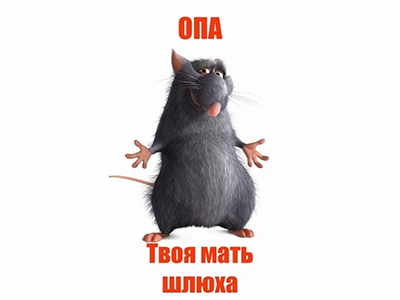
The basis of the meme is an image of Django, Remy's father from the Pixar cartoon Ratatouille. It is a promotional image of the character, not a scene in which the rat says the phrase from the title. In the mid-2010s it was used in entertainment posts; in 2016 a simpler caption, “Opa, here I am,” circulated. The gesture of open paws was already suitable for a sudden appearance in a conversation.
The history of the crude version is tied to small VKontakte communities in spring 2018. Sasha Shulyk said the joke originated in a chat among administrators and provided a dated exchange from May 18. According to this testimony, the picture was made by Danil Mamrov. There was also another claim about earlier authorship, not accompanied by a preserved original. In June the image spread through comments and became part of mass raids on brand pages. From a local exchange it turned into a recognizable recurring reply.
Rat, white background, and red lines
Django is shown in full against a white background. The dark fluffy rat has a round belly, paws spread wide, and its tongue sticking out. “OPA” is written large at the top, and two more red lines are placed below. Enough empty space remains between the text blocks, so the character looks like a ridiculous host who has come out to announce unpleasant news.
The form of the caption resembles a simple old-internet macro: the viewer first reads a short exclamation, then moves their eyes through the character toward the end of the phrase. The comic effect is intensified by the mismatch between language and image. A family cartoon supplies a harmless figure, while the caption injects into its appearance a sharpness absent from Pixar's story.
Why the reply doesn't have to fit the question
In comments, the picture often worked as a sudden intrusion. It was posted regardless of the topic, people answered with similar variants, and changed the words. The meaning arose from recognizing a shared game: participants saw the same rat but awaited a new ending. Therefore a separate macro could look meaningless to someone who had not followed the chain of repetitions.
The final word allowed the direction of the joke to change while keeping the familiar beginning. Sometimes instead of an insult a profession, an object, or an unexpected compliment appeared. This is how the deception of expectation works: the reader knows the harsh original formula but gets a completely different ending. The character's head can also be swapped, turning the common silhouette into a mask. Still, the main identifying mark remains the combination of open paws, red text, and the sudden “Opa.”
Invented twists on a familiar phrase
The invented variant “Opa, your mom is an architect,” posted after a photo of a perfectly assembled wardrobe, swaps aggression for an unexpected acknowledgment of skill. Another example: “Opa, your mom has already fixed everything” in response to a long argument about a broken kettle. The rat appears as a ridiculous herald of the resolution while the participants are still discussing theory.
The third remake: “Opa, and here's the deadline,” where the bottom line warns of an approaching deadline. It keeps the sense of intrusion but completely changes the addressee and subject. All three examples were made up to explain the construction. They are linked by a familiar visual shell: even heavily altered text recalls the original picture and makes the very anticipation of its repetition part of the joke.