Room Guardian, not a found cat
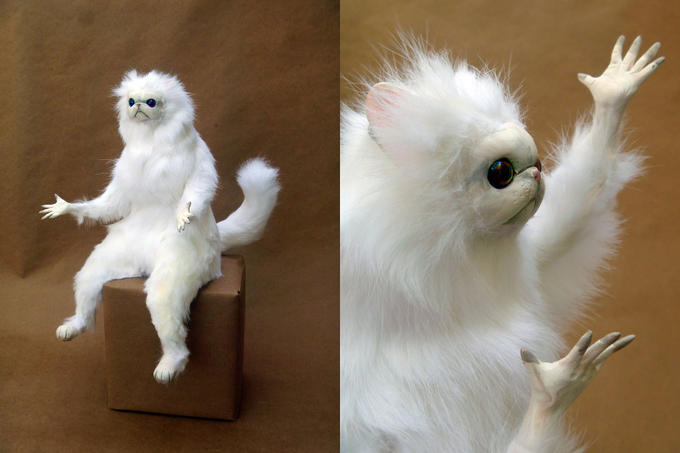
AnyaBoz is the name of the artist who created the Persian Cat Room Guardian. It is one of her original figures, which she calls room guardians: they were conceived as fantasy creatures for a shelf or windowsill, not as soft toys for play. In the artist's description, the early version of the cat is made from real rabbit fur, while the face, hands and paws were sculpted separately; later copies had faces cast in resin. A movable frame allowed the pose to be changed, so in the photos the figure could raise or spread its arms.
The artist posted photos of the original cat on DeviantArt in August 2013. They existed several years before the meme wave: first the audience saw the work of a doll artist, not an internet character. AnyaBoz later wrote that the image spread without permission or credit, but at the same time it drew people to her work who wanted to know who made the figure. This twist explains why the meme has unusually specific authorship, even though many reposts lost it.
From art doll to Instagram reaction
On February 5, 2016, an early well-known meme post with two photos of the Persian Cat Room Guardian appeared on Instagram. The caption played out a quarrel between a couple: a person asks what happened, and in reply hears that they should know themselves. The doll simultaneously spreads its arms and keeps an immobile face, so the scene conveys a mix of bewilderment, irritation and theatrical “well, there you go.” Soon the images began to be used separately from that original everyday situation, attached to other moments where a person does not understand the reason for someone else's reaction or does not know what to answer.
This is how a distinction arose between the date the object appeared and the date of its meme life: the art object has been known since 2013, while its mass reaction use dates from 2016. The original post explains one specific storyline, but the figure itself turned out to be broader than that. Its stillness allows for irritation, fatigue and pure bewilderment alike; a caption may choose one reading, but without text the viewer easily suggests another.
Two photos, two scales of gesture
In the first frame the white figure sits on a box, its legs hanging down on either side, its tail curving behind it, and its arms spread almost to the sides. In the second, the photo is zoomed in: the large head, small dark eyes, nose and raised arms are visible. The contrast of scale helps read the figure at once: first as a strange creature in a room, then as a reaction with a very explicit gesture. The face barely changes, and it is precisely this stillness that creates the funny mismatch between the broad bodily gesture and the stone-faced expression.
The author's concept of the Room Guardian, protecting the home space from negative energies, turns the pose into an extra game. The doll seems to guard the room and at the same time asks what is going on. For a meme reaction it is enough to see a white fluffy body with arms out to the sides. But the object's history adds a layer that gets lost under labels like “monkey” or “monster”: this is a carefully made artist's doll, not an unknown little animal.
Invented occasions for the reaction
“When I opened the fridge for the third time, hoping dinner would have updated” is the figure spreading its arms in front of its own fruitless expectation. “When the app asks you to confirm you're not a robot and then asks you to pick all the traffic lights” is the raised arms conveying the confusion of a person given an endless task. “When a colleague says ‘I sent the file’ but there's no file or message in the chat” is where the second photo can deliver a short silent question. These are invented captions, not real posts from the original account. They choose different shades of the figure: weary bewilderment, irritated helplessness and silent waiting for explanations.