An old tea pack instead of a cover
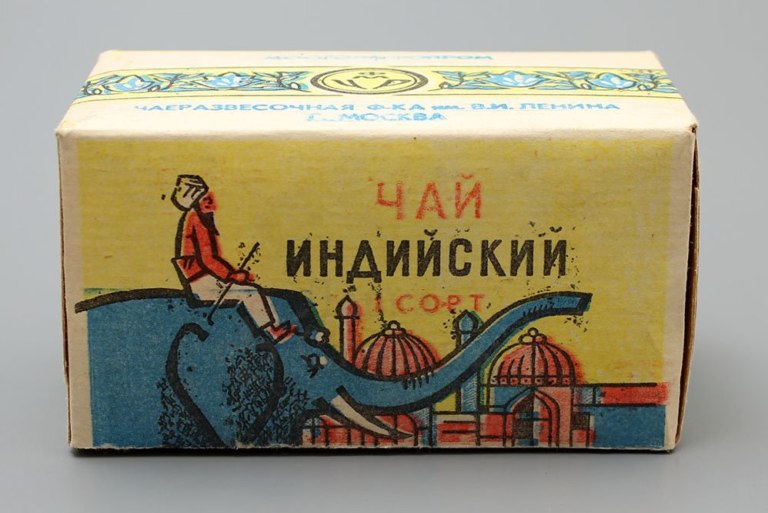
The picture shows a tea pack from the Soviet era, wrapped in paper: a yellow background, the red word “Chay” (tea), the large word “Indiyskiy” (Indian), and below it “1 sort” (Grade 1). At the bottom is a blue elephant with a mahout in red clothing, and pink domes of a fairytale eastern city. At the top, in small print, is the name of the Moscow Lenin Tea Packing Factory.
This is not a clip from the video and not the cover of the track, but an illustration of the theme: a packaging familiar to many people for Indian tea. How exactly the image became attached to the song is not known for certain, so it should not be tied directly to the performer.
Who sings and how the track reached viewers
The song is performed by Ayub Vakharagov; descriptions call the track a Chechen pop song. According to music services, the track “Indian Tea” is dated 2021. Transcriptions describe a mix of Chechen words with Russian and English insertions, and the chorus lists Indian, Georgian, and Kalmyk tea.
At the end of September 2021, as analyses describe, the rhythm was picked up by comedians from the group Lena Kuka on the TNT show Igra (The Game): contestants danced to it. After that, fragments of the song began to be put under videos en masse. Where the recording came from exactly and when it was first posted online is not known: different sources give different dates.
Note one more detail of the packaging: the elephant and the domes are drawn flat, in several colors, like printing from the middle of the last century. Such a look immediately reads as “greetings from another time,” and that is why the pack pairs well with a song that also sounds slightly old-fashioned and homely. Yet the packaging remains packaging: it says nothing about the song or its author.
Why tea, specifically
The song is funny not for its meaning but for its structure. The list of varieties, “Indian, Georgian…,” repeats like an incantation, and the brain quickly memorizes the rhythm even without understanding the words. A memorable repetition, a bright dance base, and an unexpected theme, an everyday drink, make it ideal for short videos.
The second layer is contrast. Energetic vocals and a dance beat play over very domestic scenes: a kettle, a mug, a tea bag. The more ordinary the picture, the funnier the solemn delivery.
Captions and breakdown
“Mom said: put the kettle on. I did, turned on the music, and now I’m dancing next to it.” The joke is that a simple request turns into a full performance.
“The guest asked for just tea. I brought three kinds and explained each one.” An exaggeration: a short question gets an overly detailed answer, like a repeating chorus.
“Monday, 8:55, me at the water cooler with a tea bag.” The caption gives the sound a cheerful mood in the most boring situation. The contrast works just as it does in the song.
“When Grandma takes out the tea set, it means a two-hour tea ceremony.” A home ritual is presented as a major event.
How to use it
The picture of the pack is best as a nostalgic or homey image: pair it with captions about the kitchen, tea drinking, pantry supplies, and the “right” variety. If you need a direct reference to the track, add the chorus words or the word “dance” to the caption, since the pack itself does not name the song.
Do not use the song or the picture as a joke about the performer’s nationality or region: what is funny here is the rhythm and the tea theme, not people.