Creator and series
The character was created by Andrei Bilzho, the author of a short animated series that premiered in 1992. The exact release history, number of episodes, and the TV channel are not known. The series showed storylines featuring an ordinary everyman who comments on everyday life with weary humor. The series is aimed at an adult audience and addresses the daily grind of an ordinary person, so its humor is built on observations rather than plot twists.
The visual style is outline drawing with a limited palette and expressive faces. This style helped emphasize the character's typicality: he's recognized by his silhouette, clothing, and facial expressions rather than by individual traits. The outline-drawing technique made it possible to change scenes quickly and produce short episodes that fit easily into the program and were just as easily memorable to viewers. The series remains a notable example of early Russian-language animated humor for an adult audience.
The image of the ordinary everyman
Petrovich is a caricature of an ordinary person living an everyday life who often voices displeasure with how things are going in the country. His lines and behavior underscore a down-to-earth view of events: small troubles, exhaustion, sarcasm. The type matters more here than the details of his biography, which is why the character transfers easily into new situations.
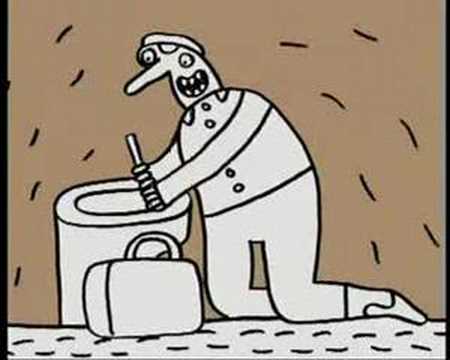
In the illustration most often used in memes, a figure in a cap is bent over a white object resembling a toilet, with a suitcase standing nearby. The scene conveys a sense of disarray and grumbling about the mundane, and it's exactly by that quality that the character is recognized from a single frame. The character's clothing and posture work as a language of their own: the cap and the slouched posture communicate his character before the viewer even reads the caption or recalls a line of his.
How the character became a meme
The image moved beyond the series and took on a life online: shots and lines from the character are used in comments, captions, and ironic comparisons. He's recognized by his distinctive manner, and a single frame is enough to convey the thought that everything around is going wrong. The character often turns up in captions on news about prices, home repairs, and bureaucracy, because these themes line up well with his habitual grumbling.
The meme developed as part of a nostalgic wave for 1990s cartoons. He's quoted in modern contexts too, and his image often reappears in compilations of retro memes, where 1990s characters are paired with contemporary captions. The exact chronology of his popularity and the extent of its spread in open sources haven't been established.
Politics and humor
The "Politics" tag in the description indicates that the character is often used in political humor. It's important to understand that he works as a type — the grumbling everyman — rather than as a depiction of a real politician. The satire here targets the general mood rather than specific individuals. That's why he's often cited as a convenient type that helps describe a general mood without referring to specific names or organizations.
This approach makes the character convenient for irony: he allows people to talk about discontent and everyday life without direct accusations. However, interpretations depend on context, and the same joke can sound different depending on the time and the audience. It's useful for readers to remember that such a character isn't an official statement and doesn't reflect the series' creators' positions on political issues.