Source footage
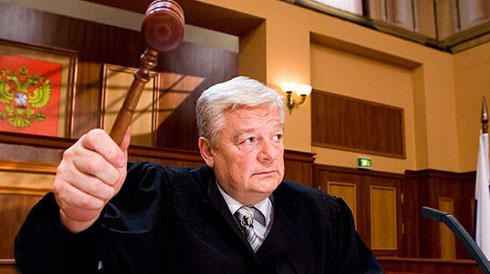
The basis of the meme is footage from the TV format "Court of Jurors," in which conflicts involving invited parties are resolved in a studio setting. A judge in a robe, sitting at a table beneath the state emblem on the wall, became a recognizable image for viewers of such programs. The shot of a raised gavel, which traditionally symbolizes a final decision, turned out to be a convenient template for internet jokes.
The exact date the first comic appeared is not established. The meme dates to 2017, when pictures with the character's serious face and a short caption over the frame were actively circulating on the Russian internet. The name of the author of the first version is not known.
How the meme works
The format is built on a simple device: the judge hands down a verdict that's supposed to sound like the outcome of a serious proceeding, but the grounds for it are ridiculous. The caption under the frame usually states an absurdly petty reason, for example that the defendant was late for the bus or put a comma in the wrong place in a contract. The more solemn the judge's tone and the stricter his gaze, the stronger the comic effect from the mismatch between the verdict and the reason for it.
The meme works even without a long caption. The gavel gesture and the judge's expression alone are enough for the viewer to understand: the case is closed, final, and without any real grounds. That's why the picture is often used as a reaction to someone else's dubious excuse in an argument, to a trivial pretext, or to a situation where a decision was made too easily and without discussion.
Spread across communities
On social networks and in comment sections, the picture circulated as comic strips with short lines in speech bubbles. The format turned out to be convenient for quick adaptation: one frame, one phrase, humor that needs no explanation. These templates passed from one community page to another, picking up new captions and gradually losing their connection to the original show.
Over time, the phrase "fully acquitted" itself started being used as a standalone expression. It's said when talking about someone's situation that deserves closer examination, but the other person settles it in one stroke, without arguments. The phrase easily adapts to context, which is why it has stayed alive years after the picture first appeared.
Variants and usage
Three types of captions are most common. The first is an everyday excuse that doesn't save anyone from consequences and becomes a reason for irony. The second is a technical detail, for example an error in a manual or a discrepancy in documents, because of which the judge rules in favor of the accused. The third is irony about the justice system itself, when the acquittal sounds like a joke about a system where everything gets decided as a formality.
The meme is often combined with other frames from TV shows and courtroom plots, turning a series of pictures into a whole story. Sometimes the judge appears in the role of a boss making a personnel decision without discussion, or a teacher giving a grade for an obviously weak reason. Such variations preserve the structure of the original comic and need no explanation.
Cultural context
For a Russian viewer, the image of a judge in a robe is tied to the many courtroom shows that filled the airwaves in the 2000s and 2010s. These programs presented the proceedings as a spectacle in which the verdict sounds quick and categorical, while the participants' emotions are pushed to the forefront. The meme mocks exactly that style of presentation, not the specific people who ended up on screen.
It's important that the joke isn't aimed at a real defendant. The character in the comic serves as a generic figure, and the lack of a serious reason works as satire on bureaucracy and hasty decisions. That's why the picture remains neutral and easily transfers to different contexts, from school group chats to office discussions, and doesn't require knowledge of any specific episode of the show.