What is visible in the frame
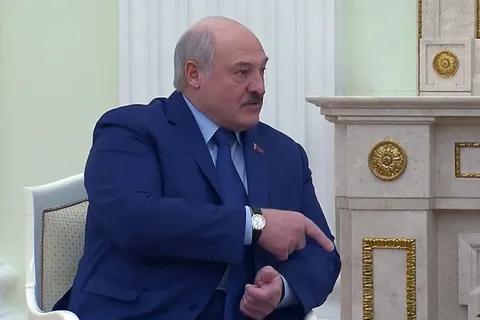
A man with gray hair in a dark jacket, light shirt, and striped tie sits at a table with his hands clasped in front of him. His mouth is open and his face is tense: the man is clearly speaking. On the left stands a decorated New Year's tree with tinsel and blue baubles; on the right the edge of a flag with yellow, blue and red sections is visible, with a curtain and blinds behind it. The picture is grainy, as happens with copies of old television recordings.
The festive tree next to the official pose creates a strange contrast, and that is exactly what makes the frame convenient for captions: a festive setting, but a serious, heavy tone. This is an address recorded on New Year's Eve, and the viewer immediately reads the event even without hearing the sound.
What was actually said
On December 31, 1999, Boris Yeltsin spoke for the last time as President of Russia and announced that he was resigning ahead of schedule. The address began with words that he had made a decision, and then he said that he understood it was necessary to do so. Among the main arguments was the idea that the country should enter the new millennium with new politicians and new people. He also specifically asked forgiveness for hopes that had not been fulfilled.
The phrase “I'm tired, I'm leaving” does not appear in the transcript of this speech. Yeltsin explained his decision by political considerations, not fatigue, which is clearly visible when reading the text. After his departure, powers passed to Prime Minister Vladimir Putin as acting president. Therefore, a caption in the spirit of “I'm tired” is not a quote but a folk retelling of the event, which is used as a joke.
Why the inexact quote caught on
Spoken quotes get compressed: a long, measured speech turns into one memorable phrase. “I'm tired, I'm leaving” sounds like a natural explanation for a resignation, so many people remember exactly this phrase, even though the actual words were different. When this shortening became an internet joke is hard to establish reliably: such formulas arise in conversations and comments long before they end up in pictures.
What matters is that the meme doesn't require believing that Yeltsin said exactly this. The general sense of “a person announces that they've had enough” is enough. That's why the joke lives both among those who know the quote isn't verbatim and among those who believe it.
How the joke works
The mechanics are simple: a big gesture for a small reason. A serious presidential frame with a solemn backdrop is laid over an everyday “that's enough for me.” The smaller the occasion, the louder the contrast: fatigue from Monday or from a messenger chat is described in the language of state decisions.
A second layer also works: the person in the frame doesn't shout or complain; he sits calmly and composedly. The caption acquires a tone of dignity. To leave not with a scandal but with an official statement is both funny and recognizable. The meme works best for situations where the author truly wants to finish and puts a full stop with deliberate solemnity.
Caption examples
“Me, closing the twentieth tab of documents on Friday at 6:01 p.m.” — the exact time adds realism: the fatigue has built up precisely by the end of the work week.
“My cat when they pick him up for a photo for the third time” — the fatigue is transferred to the animal, and the solemn tone of the joke makes his reaction significant.
“Me, when the family chat starts discussing who is cooking what for the holiday” — an everyday argument presented as a reason for resignation.
“My patience in a line with no numbers” — the caption puts the emphasis on accumulated irritation rather than on a specific event. In all the examples, the mismatch of scales is what's funny: a statement at the level of a country is made over a trivial occasion.