Greetings in the sketch
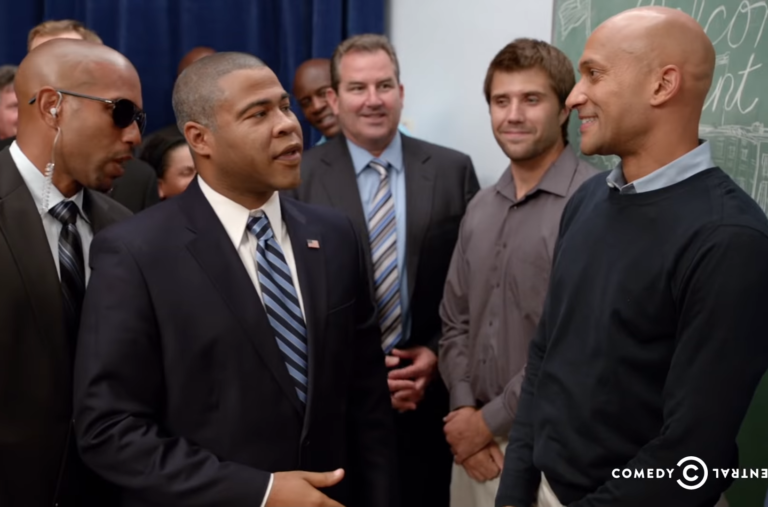
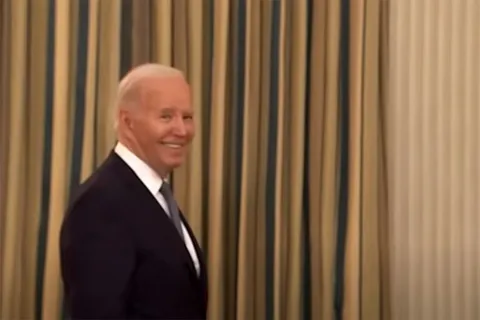
Comedy Central published the sketch “Obama Meet & Greet” on September 24, 2014. Jordan Peele plays President Barack Obama, who, after a speech, walks along a group of guests. The photo shows Peele, the people around him and the meeting room; this frame has no captions and by itself does not show the two sides of the later meme comparison. Other guests stand nearby waiting their turn, so the frame feels like part of a public meeting. The person on the right smiles and turns toward the actor, while the other guests wait for the next greeting.
The original joke is built on a shift in manner: the character formally shakes hands with white guests, but greets Black guests much more warmly, with hugs and friendly gestures. This is a satirical scene from an actors' show, not documented presidential behavior. The repetition of the meeting with different people makes the contrast visible at once, without any explanation from a narrator.
The video returns in 2018
A few years later, viewers started editing the sequence of greetings itself into a video comparison of two preferences. Early versions used favorite Marvel movies and basketball players the authors singled out from the rest. These examples show how political satire turned into a template for personal tastes.
By early October 2018, Peele publicly reacted to a remix about mental health and self-care. The familiar greetings went beyond the TV plot: instead of a fictional politician's behavior, viewers discussed their attitude toward their own desires and everyday decisions.
The rhythm of two options
In the video, the repeated meetings turn gestures into a scale: the character approaches each next person and greets them differently. Two reactions stay in the foreground, and captions label what is being compared. This explains why the format works better as a sequence than as a single frame.
In later use, the same gestures directly show the caption author's preference: a warm welcome equals a choice, a formal gesture equals refusal or indifference. The difference between them keeps the drama of the original sketch even when the context changes completely from political satire to a list of personal tastes, and the repeating structure of the clip lets many items be compared at once. Each appearance of a guest becomes a new line of comparison, and the longer the row, the more obvious the final scale of preferences, built by the viewer without a single word of commentary.
Examples of invented captions
The examples were invented for this article. The warm greetings get the caption “Start the game I've been putting off for a long time,” and the formal one gets “Reply to the email marked ‘not urgent’.” The unequal joy turns an ordinary choice after work into a ceremony: the viewer recognizes an appealing rest and a task one doesn't yet feel like tackling.
Another variant is “Weekend plans”: one guest gets “meet friends,” the next gets “explain again why it didn't work out.” Both captions describe comparable options, and the repetition of greetings makes the preference noticeable without any separate explanation.
For a food comparison, the warm meeting can be captioned “Dinner is ready,” and the reserved one “First I have to wash all the dishes.” The same sequence of gestures becomes a small story about which part of the home evening a person looks forward to most.