Where the frame comes from
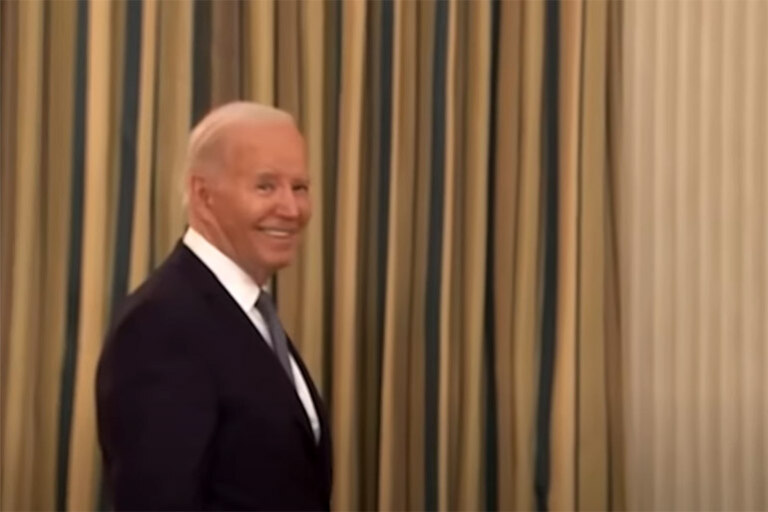
On May 31, 2024, U.S. President Joe Biden made a statement in the State Dining Room of the White House about the situation in Gaza. As he was leaving, NBC reporter Kelly O'Donnell asked him how he would respond to Donald Trump's claim that he considers himself a political prisoner and blames Biden. Biden turned to the journalist and smiled; this brief moment is captured in a video that became widely known.
Later, this fragment was used in political communication, and then it became a standalone reaction image. Behind the frame is a specific question from a reporter, but the photograph contains no answer and does not reveal Biden's inner reaction. Therefore, captions about spite, agreement, or a premeditated plan are creative interpretations added by the meme, not proven facts about the person.
Why a backward glance became a template
The shot works as a small scene: the character is already leaving but glances back for a moment. The smile reads as a calm final gesture, and the viewer fills in the conversation that came before. This structure is handy for stories with a payoff—when a character leaves an awkward meeting, ends an argument, or notices a situation has gone differently than planned. The background of tall striped curtains adds a recognizable formality to the frame, sharply contrasting with everyday captions.
By late 2024, the video was also being paired with music edits and credits, as if it were the final scene of a film. Here what matters is not the biography of a specific politician but a cinematic device: a brief slow-down, music, and an exit transform a fleeting gesture into a complete story. Even without sound, a still frame keeps the structure "said or saw something, understood, left with a last look."
How to read the facial expression
In meme use, the smile can mean unflappability, a polite goodbye, hidden irony, or satisfaction that the conversation is over. The caption supplies the meaning, not a universal dictionary of emotions. For example, "Me after 'this will only take two minutes' and an invite to yet another hour-long call" makes the image a reaction to a drawn-out meeting. The viewer gets it: he seems to stay polite but is already heading for the exit in his mind.
"When someone in the chat asks me to resend a file I sent at the start of the thread" turns the backward glance into a gentle reaction to inattention. The caption is funny because it repeats an action that is already done, and the image becomes a visual "I already sent it." Neither example requires a political stance and show how readily a facial expression shifts meaning when context changes.
Examples and rules of use
For a mini-story: "Me closing the laptop after an email marked ‘urgent’ with no description of the task." He leaves not because he knows how it ends, but because he has seen how absurd the situation is. Another option: "When I said 'see you tomorrow' and the other person started explaining everything from the beginning"—the smile becomes a polite goodbye that viewers recognize from their own lives.
When publishing the image, it helps to remember it comes from a real political episode. If the joke concerns current events, do not present invented thoughts or lines as real. If you just need a reaction to awkwardness or ending a conversation, an everyday caption is more precise and does not mislead the reader. The meme works best when kept short: first the situation, then the glance, which serves as the full stop.