The phrase that became audio
The widely known version goes: "Hello! This is my house. This is a Satana. He's my friend." In November 2020, TikTok user @chirilescuancuta published a video linked to the early spread of this audio track. However, the source of the male voice has not been established: it is impossible to say with certainty who spoke the phrase or where the original line was recorded.
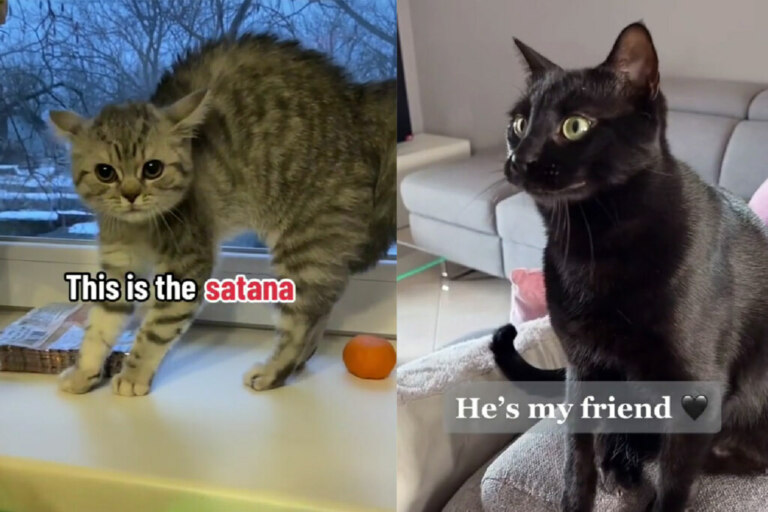
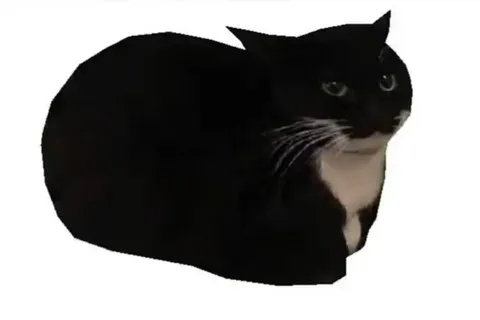
Later, users began filming their own pets, acquaintances, and household members to this sound. The image shows a gray cat on the left and a black cat on the right; the caption calls the first cat "Satana" and the second his friend. This preserves the structure of the original phrase, but adds a paired visual response. The meme does not claim the animals are dangerous; the stern look serves as a comic contrast to the friendly tone.
Why it's funny
The joke is built on a calm presentation of someone who looks like a source of chaos. The word "Satana" promises danger, yet the speaker calls him a friend without the slightest concern. The more serious the pet looks, the funnier the gentle tone. If the character in the frame is not threatening at all, the contrast is weaker, but you can play with an unexpectedly dramatic nickname.
In many versions, the caption matches the audio and reveals the relationship between characters. In others, the second character plays the role of a "friend," neighbor, or unwilling partner. Order matters here: first identify the house, then introduce the main character, then add an acquaintance. Removing the last step can lose the sense of a warm family scene. Just as important, the possessive "my" turns the story into a personal introduction: this is not a nameless monster, but someone to whom the speaker is clearly attached.
Caption ideas for "This Is A Satana. He's My Friend"
For a photo of two cats: "This is my house. This is Donut. He thinks he's Satana. And this is Luna. She checks his homework." It's funny because the menacing role went to an overconfident cat, while the second one plays the strict sidekick.
For friends on a trip: "This is my friend who said he knew a shortcut. This is his map. He's my friend." The joke isn't seriously accusing anyone: the warm admission smooths over the fallout of a small navigation disaster.
For a pet sleeping on the keyboard: "This is my assistant. He closes all the windows. He's my friend." The affectionate ending turns annoyance at the interruption into household tenderness.
How to make your own version of "This Is A Satana. He's My Friend"
The format works for short videos with one or two characters with clearly distinct personalities. You can synchronize the appearance of each person or animal with a separate part of the audio. In a paired version, "Satana" is shown first, followed by his calm companion. It is important that participants consent to publication and that the joke does not come down to the idea that a person is dangerous because of their appearance.
It is easy to quote the sound in a personal chat when you want to introduce a pet or tease a friend in a friendly way. In work correspondence, it only works with clear common context: calling someone "Satana" without a warm conclusion can look like an insult. The most reliable sign of tone is the final affirmation of friendship, which returns the scene to attachment.