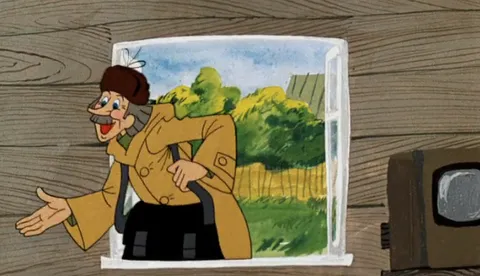
A pair of cartoon characters
The image shows Dr. Heinz Doofenshmirtz and his adversary Perry the Platypus from the animated series Phineas and Ferb. Doofenshmirtz is a hapless villain and inventor who over and over builds devices with names ending in “-inator”; Perry secretly works as Agent P and foils his plans. This recurring structure of the episodes became a comic device in its own right even before viewers began plugging in their own invention names.
The picture shows a multi-step scene with the characters and a device; the specific episode cannot be identified from a single screenshot. The formula “Behold, Perry the Platypus, I have invented...” (in the Russian meme version, “Tremble, Perry”) is widely known as a meme adaptation, but an individual frame may come from different episodes. It is therefore correct to speak of the show's recurring setup without attributing this particular picture to one episode.
The formula and the unexpected word
The template is built on the promise of a grand invention and a funny or silly name. First the viewer hears a theatrical introduction, as if something important is about to happen, and at the end gets a pun or an everyday exaggeration. The name can be tied to any topic: queues, notifications, forgotten keys or endless tasks. The villain's serious pose makes even a trifle look like a plan of global scale.
The “-inator” construction makes it easy to coin new words. This is not a random string of letters: a good version should be easy to read and make clear which habit or situation it is poking fun at. An overly complicated reference needs explaining and weakens the punchline. The shorter the word and the clearer the everyday occasion, the better the shift from pathos to triviality works.
From a running gag to an online trend
In the cartoon the device usually kicks off the plot's conflict and then turns out to be flawed or produces an unexpected result. Viewers expect the next “-inator” in advance, so the repetition becomes part of the fun. In online versions, authors use frames from the show and invent their own names. In Russian-language communities a wave of such pictures spread actively in autumn 2022, but the format itself is based on an old joke from the series and did not arise at that moment.
Variants differ in tone: some use harmless wordplay, others political satire or adult language. The local picture may be a repost or an edit of earlier work; the author of the template has not been confirmed. There is no need for the article to name every reposter or list controversial examples: it is enough to show the constant mechanics that readers can use on their own.
Inventing your own inators
For home: “Behold, Perry the Platypus! I have invented the Dirty-Cup-Vanish-inator!” — a device that merely moves the dishes into the sink. For work: the “Report-Closer-inator,” which turns out to be a calendar reminder. For study: the “Concentrator,” set to shut every tab except the one with your notes. The absurdity should be clear and should not turn into a real set of instructions.
You can use a two-panel caption: first Doofenshmirtz boasts, “I have created an automatic alarm clock,” then the device wakes its owner an hour early. This plays on the mismatch between promise and result. For a themed chat, the “Deadline-Approach-inator” works: it does not do the work, it just shows the clock. A problem the audience already knows replaces a long backstory.
If the format is used on a political topic, it is better to criticize a public decision or rhetoric than to call for harassment of a specific person. For a family-friendly post you can do without crude names and give Perry a neutral look of surprise. This keeps the characters and the formula while the humor stays accessible to a wide audience.