The meaning of the word
Hype is a burst of discussion, public and media attention around a person or event that usually passes quickly. The word doesn't describe the subject of discussion itself but the intensity of interest: a buzz can arise around a musician, a blogger, a film, or a scandal, and what matters is precisely the speed with which it appears and disappears.
'Khaiponut' means to deliberately attract such attention by any means. The verb often carries a note of disapproval: it implies that someone is willing to resort to provocation, shock tactics, or dubious statements in pursuit of popularity.
It's important to distinguish hype as a phenomenon from hype as a judgment. Interest in an event by itself doesn't mean the event is empty: the media and the audience often turn to serious topics just as noisily as to entertainment. So the word is often used not as a verdict but as a description of how loudly a given occasion is being discussed.
Origin of the word
The word is borrowed from the English 'hype,' which meant promotional ballyhoo as far back as the mid-twentieth century. In Russian it took hold in colloquial speech and media jargon roughly from the mid-2010s, when social networks and video blogging made rapid bursts of attention a mass phenomenon. The exact date of its first use in Russian has not been established in open sources.
The pairing 'hype — anti-hype' became established as a convenient way to describe opposite reactions: first the noise, then the countermovement against cheap popularity. Anti-hype isn't an organization or a movement in the strict sense — it's more a stance expressed in comments and posts.
The 'I am hype' image
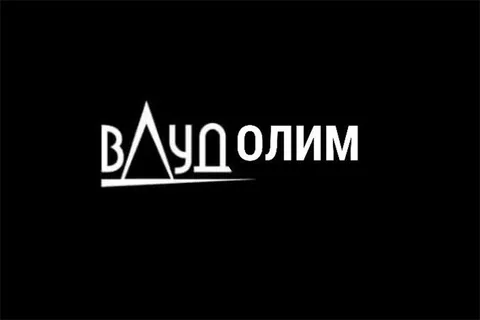
The image is a short caption, 'I am hype,' in white pixel letters on a black background. The simplicity of the design makes it convenient: the caption reads instantly and needs no context. The phrase sounds like a self-description tinged with irony: the person admits that their popularity is the result of noise rather than real merit.
The image is often used in response to dubious news or to a post that gathered a lot of attention in a short time. It works as an honest admission that the author, or the subject of the situation, is generating noise around themselves, whether deliberately or not.
Anti-hype as a stance
Anti-hype is expressed through criticism of artificial popularity: users question the value of events that are rapidly racking up views and call for not feeding provocations. Formally it isn't a separate subculture, but opposition to the noise has become a stable motif in discussions.
Sometimes anti-hype turns into hype of its own: criticism that gains attention itself becomes grounds for new disputes. This paradox is often played up in memes, and the captioned image also works as a joke about this closed loop.
In Russian-language discussions, anti-hype is sometimes confused with simple negativity. The difference is that anti-hype targets the very mechanics of artificial attention, not a specific person. This stance is convenient because it allows criticizing the noise without crossing into personal insults.
Usage and criticism
The term is used in the media, in breakdowns of blogs and music releases, and in everyday arguments about whether a new scandal deserves attention. The word is convenient because it describes an entire mechanism in a single term.
Critics point out that the habit of calling every notable event hype devalues real achievements and makes discussion shallow. For that reason the concepts remain in the language as a tool of assessment, not just as a label for annoying stories.