What is visible in the intro
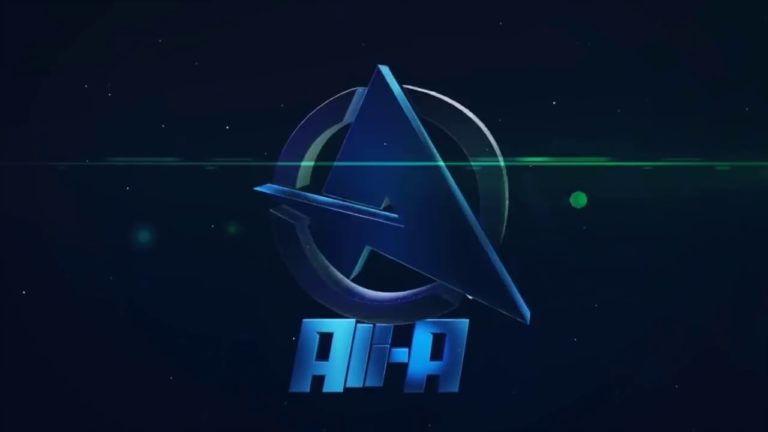
The frame is set on a dark blue background with scattered light dots. A thin green stripe of light runs horizontally across it. In the center stands a blue 3D letter “A,” resembling a sharp arrowhead, with a gray ring around it. Below, “Ali-A” is written in blue font.
This is computer graphics with no people. The style is recognizable within the first seconds, which makes it convenient for parodies: the viewer understands that a video is about to start before the full name appears.
The channel and its intros
Ali-A is a British blogger known for videos about games, mainly the Call of Duty series and Fortnite. The channel name is used as a brand, and the logo with the letter “A” appears in several design variants.
Over the years the channel's intros have changed, but the exact dates and makeup of the versions differ across descriptions, so they are not given here. The frame resembles a later design with the blue arrow-like letter, though a single still cannot confirm an exact match with a specific version.
The intro as a template
The intro is recognized because it was often used in videos about unlucky moments. Reportedly, one version became the basis for parodies in which the intro is placed before a funny scene, with the sound deliberately overloaded with bass.
This is how the channel's graphics passed into the shared language of internet humor: the intro is perceived as a signal that “something loud is about to happen,” and breaking that expectation is the joke.
For video editing it matters not to overload the parody: it is enough to keep the logo, the flash, and a pause, then show an unexpected shot. If too many effects are added, the main contrast between the solemn opening and the down-to-earth continuation disappears.
Examples for parodies
Example 1: “Three seconds of light, then a spreadsheet with an error: that's how my report begins.” The intro sets up expectations of a serious presentation, and the spreadsheet destroys them.
Example 2: “Five seconds of solemn music, and the pizza is already on the floor.” The caption uses the intro's rhythm and replaces the dramatic finale with a fall.
Example 3: “The intro of my cat, who crawled out from under the sofa and looked at the bowl.” The parody transfers the grandeur to a domestic scene.
Example 4: “My morning: a solemn opening, then an alarm clock I turned off on the third try.” Here the intro serves as a loud announcement, followed by the most ordinary and slightly awkward event.
In all the examples the intro's pomp is laid over an everyday plot, and the anticipation of the effect becomes the main source of laughs.
How intro parodies work
A parody of an intro is recognized by its rhythm: sound, a flash of light, the letter appearing, a pause. All of this is kept, while the content changes. The more precisely the rhythm is repeated, the stronger the contrast with what comes next.
The joke concerns form, not a person. The intro is the channel's graphics, and the parody plays on its recognizability, so captions should not move into the personal life of the channel's author.
A good parody usually follows the same order: first expectation, then a short silence, then the plot. If the order is broken, the viewer stops recognizing the original, and the joke loses its footing.
The breakdown of the joke comes down to a simple rule: the more solemn the delivery and the humbler the content, the funnier the result. The intro plays the role of a “fanfare” before an entrance, and any everyday plot after it seems funny.