Photo of the museum exhibit
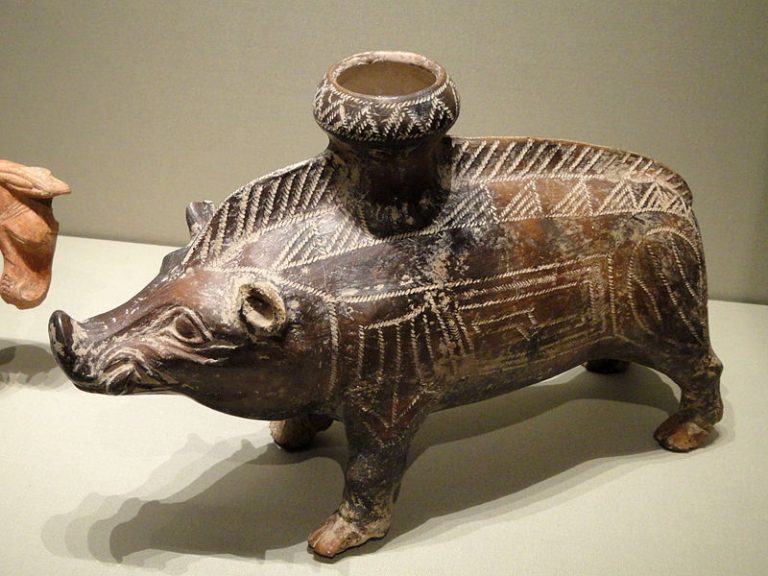
The vessel is in the collection of the Cleveland Museum of Art under number 1977.42. The recognizable photograph was taken by user Daderot on September 7, 2012, and uploaded to Wikimedia Commons in December of that year. This gap matters for the image's history: the date of the shot is not yet the date it turned into an internet joke.
In June 2018 the vessel got a notable wave of popularity on Reddit. A post by user esssssto in r/me_irl from June 13 survives: in a comic, the promised purchase of a burger was replaced by buying a boar with the full museum caption. The object had already appeared in earlier memes, so this post is better seen as one of the pushes for its spread. After that, the long title and the photo itself were moved into other familiar templates.
Boar with a hole in its back
The photograph shows a single brown ceramic object in a museum display case. The head with an elongated snout is turned to the left, and the massive back takes up the right part of the frame. Light notches run along the body, and a neck with a round opening rises from the top. Short legs support the long body; the combination of animal figure and container is easy to notice even without knowing archaeology. The neck is a reminder that this is a vessel, not a figurine.
The frame itself contains no text or painted eyes. Its comedy appears after it is moved into someone else's situation: a museum piece suddenly becomes the object of insistent desire. The photo looks ordinary enough to be added to a shopping list, and unusual enough that such a purchase immediately breaks expectations.
The meme label and disputed dating
The formula “600–500 BC, Etruscan, Ceramic” has stuck in the meme's title, but the object's historical attribution no longer looks indisputable. The museum now lists two possibilities: 700–500 BC or the 20th century; the origin is given as either Etruscan or a modern fake. Scientific analysis allows for later manufacture, and research continues.
This does not mean the museum has definitively declared the vessel a fake. But the meaning of the confident caption has shifted: the internet has kept the old name, like a frozen quote, while the catalog refined information about the object. In jokes, the long dating remains a recognizable rhythm and a sign of belonging to a shared game, while in the object's own history it requires a caveat.
Why repeat the whole name
An ordinary caption would shorten the object to “boar” or “jug.” The meme does the opposite: it drags along a century, a culture and a material, even when the situation is entirely mundane. The official tone of the museum label sounds like the name of a beloved celebrity. The repetition creates a small cult of a thing to which an exceptional appeal is suddenly attributed.
For example, in an invented questionnaire, the question “Who would you most like to have dinner with?” gets an answer with the vessel's full name. Another joke might show a gift wrap and the hope that the boar inside is this one and not a new phone. In a third, the museum caption fills in the “favorite animal” box, even though the subject is ceramics. Here what works is not the historical value of the purchase but the stubborn preference for one strange object over all the expected answers.