From teaser to a game people waited for years
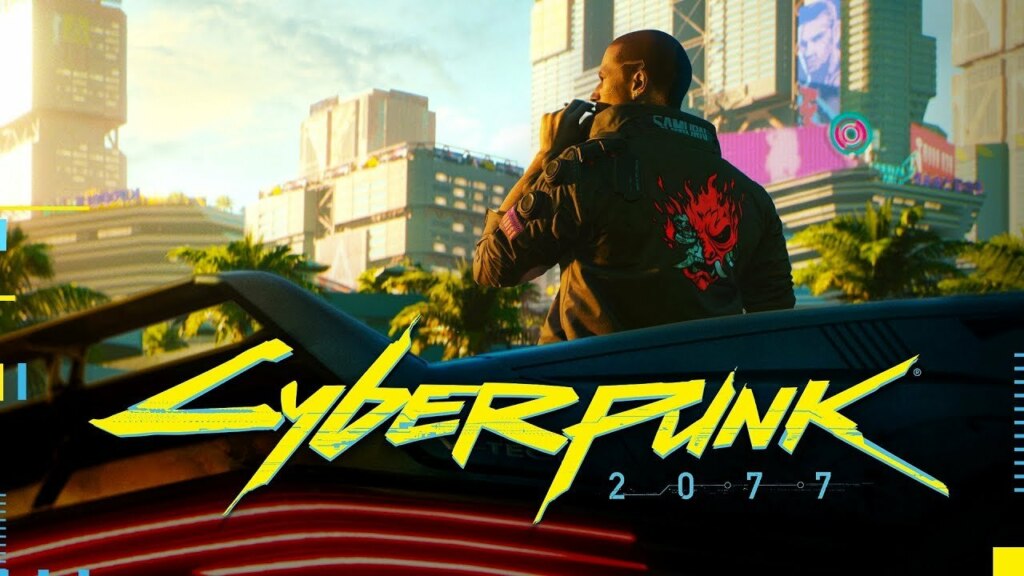
CD Projekt RED announced Cyberpunk 2077 in 2012 and released the first teaser in January 2013. A long pause followed, during which the project accumulated expectations even before the public saw full gameplay. In June 2018 the studio showed a new version of the game at E3 and revealed the core premise: the player controls the mercenary V, who tries to rise in Night City. So the picture with the logo carries not only the title but also the memory of years of waiting.
In August of that year, the developers separately showed a long gameplay recording and explained that it was captured from a version still in development. The release date, later set for April 2020, was postponed several times; the game came out on December 10, 2020. This sequence matters for memes: people joke both about the fictional future of the world itself and about the real calendar of waiting for the game.
Why V is shown from behind
The composition is built on a contrast of scale. The figure occupies the center, but buildings, screens and signs almost swallow him; the viewer sees his back rather than his face. In the official description, CD Projekt stressed that the player looks at Night City through V and chooses his appearance and background. Such an advertising frame keeps the character concrete enough to recognize the jacket and silhouette, but open enough for the player to put themselves in his place.
The Samurai emblem adds an inner reference: in the game’s world it is a group and its symbolism, tied to rockerboy Johnny Silverhand, not just a random drawing on clothing. Against this emblem even a small matter looks like the start of a big story; it is exactly this shift in scale that captions often play on.
Futuristic scale for small troubles
The joke works well when the setting promises drama while the task stays mundane. “Caption example: When I opened the group chat and saw 86 unread messages” — V seems to be entering a megacity operation, though all that awaits is sorting out a conversation.
The emphasis can shift from scale to waiting: “Caption example: They said the build would take five minutes; three hours have passed.” The recognizable logo promises the future, while the everyday plot turns the years-long wait for the game into the wait for one overdue build.
How the game became common cultural background
By release, the game already had teasers, trailers, gameplay demos, a recognizable yellow logo and promotional images like this one. In December 2020, the official release announcement brought V and Night City back into feeds, and talk about the game’s technical state became part of its public history. This created several different occasions for memes at once: waiting, visual style, the promised future, and the experience of a particular playthrough.
A fictional caption need not be about the game itself but can be about any project that is promised for a long time: “Caption example: My plan to learn Spanish after the third language app.” It sets a serious promotional frame against a modest task.