What the picture shows
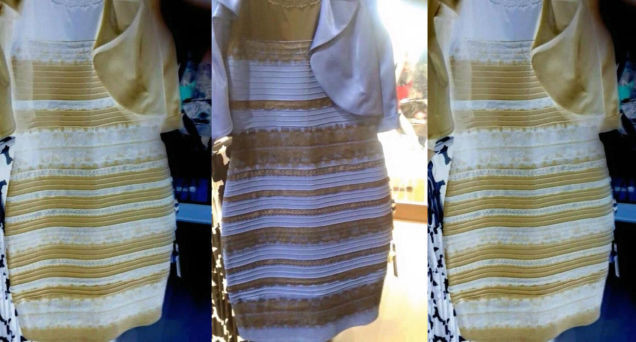
The image is made up of three fragments of the same photograph: a close-up of a woman's dress with wide horizontal stripes. In the outer fragments the stripes look predominantly golden and white, with a warm tint, while in the central frame the photo looks cooler, with blue-gray tones and a pale background. These differences in color balance are what made the shot ambiguous, even though the garment itself was actually blue and black.
The photograph conveys the lighting poorly: flashes, glare, and the unclear position of the light source make it impossible to say for certain what color environment the fabric is in. It is precisely this uncertainty that became the basis of the puzzle, in which every viewer is convinced they are seeing the real color.
History of its spread
The photograph appeared online on February 26, 2015. It was posted by the Scottish photographer Cecilia Bleasdale, who was asking acquaintances what color the dress was, since their opinions differed sharply. The photo spread quickly through Tumblr, Twitter, and Facebook, and within the first few hours the argument over its color became one of the main topics of the day.
Coverage by major media outlets amplified the reaction further: the BuzzFeed editorial team published a piece with a reader poll, and well-known people publicly shared their own perception of the colors. The hashtag #TheDress and the question "What color is the dress?" became ubiquitous, and parodies, pranks, and discussions involving psychologists and vision specialists appeared online.
Why people see different colors
The explanation has to do with how the visual system works. The brain does not perceive color directly; instead it accounts for the presumed lighting and subtracts it from the picture in order to preserve the familiar color of objects. This phenomenon is called color constancy. If the brain decides the dress is lit by warm light, it removes the yellow tint and sees blue and black; if the lighting is assumed to be cool, the objects look white and gold.
What matters is that people's default assumptions about lighting differ, and the result is influenced by habits and even by the time of day a person is used to looking at the world around them. That is why the same person can see different colors under different conditions, and disputes about perception in this case turn out not to be disputes about facts but a clash between different assumptions made by the brain.
How the meme works and is used
The dispute itself is a ready-made puzzle with two answers, each of which seems obvious. That's why the question "What color is the dress?" is often used as a test of attentiveness, an occasion for jokes about one's own eyesight, or the premise for a prank. In the Russian-language internet, captions often read something like "gold, obviously!" or "blue, are you blind?", and the discussion turned into an argument about personal perception.
The meme works because it touches on a basic sense of self: everyone is convinced they see reality as it really is. When it turns out that someone else sees it differently, surprise follows along with a desire to check oneself. This is precisely why #TheDress became one of the best-known flash mobs of the mid-2010s and is still cited as an example in popular material about the psychology of perception.