What the viewer manages to see
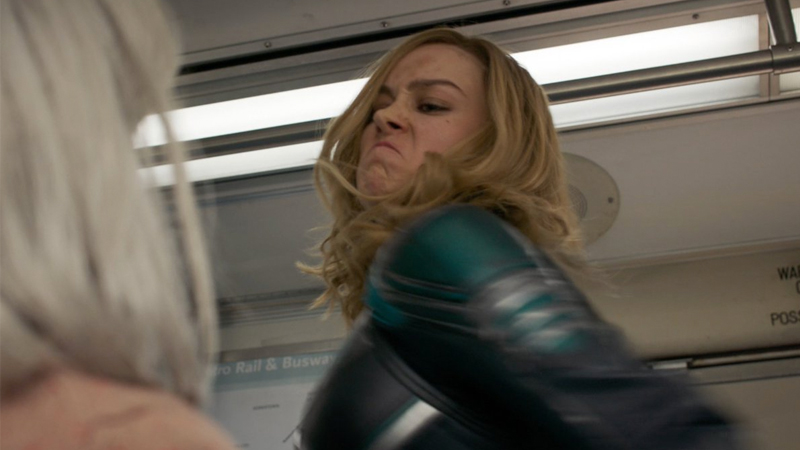
In the frame, Brie Larson as Carol Danvers swings at a gray-haired woman on a train. Gray hair and the train car make the passenger look like an ordinary elderly fellow traveler rather than an opponent of the superheroine. That is why the gesture seems out of proportion until the viewer knows the context. The official trailer amplifies this cutoff: the scene is presented as a sharp surprise rather than a complete explanation.
Later the film reveals that the woman is a Skrull who has taken on someone else's appearance. This plot knowledge changes the assessment of the scene, although memes often keep precisely the brief first glance. The title “grandma” describes the character's outward look at the moment of the blow, but is not an accurate retelling of her role.
The meme wave began with the trailer
Marvel released the trailer on September 18, 2018; the film hit theaters on March 8, 2019. As early as September 19, early remakes appeared with two opposing intonations. In a version about older generations grumbling, the blow served as a satirical interruption, while in a joke about a friend after a breakup, it was an exaggerated show of support. One short scene united them, but the direction of the reaction differed: stopping an annoying remark or resolutely taking someone's side. These dated posts show a quick reaction to the trailer, but do not establish the first author. The meme frame spread several months before viewers could see the full film and learn the reason for the blow.
Who gets the role of trigger and who the reaction
Captions above the characters turn the scene into a diagram of conflict: one marks the trigger, the other the one responding to it. A common line on top is built differently: it sets the situation as a whole, leaving the viewer to assign roles from the movement of the figures. Short text matches the sharpness of the freeze-frame better. If the caption demands a long explanation, the on-screen gesture stops being an instant resolution: the reader first parses the conditions, then returns to the picture to understand who is responding and to what.
The meme's structure rests on the scale of the reaction. The trigger in the caption is often small or verbal, while the image responds with a movement from an action movie. The more precisely the text sets the line after which this gesture follows, the clearer the reader sees the contrast between the conversational trigger and the on-screen force.
Three invented triggers for a sharp gesture
Invented caption: “Colleague: 'I saved the final version over the original' — me, when I found out there is no backup.” Here a concrete mistake gives a clear trigger for an exaggerated reaction; roles are divided between the author of the mistake and the one who discovered the consequences. Another variant: “Friend: 'I already included spoilers in the voice message' — me, who hasn't finished the season yet.” The joke rests on recognizable annoyance, not on an accusation against a real person.
One more example: “Host: 'First I'll explain the rules, then we'll start the game' — me after a forty-minute introduction.” Here the host sets the source of impatience, and the on-screen gesture turns the long pause into hyperbole. These invented captions show how a precise verbal trigger changes the readable role of one and the same movement.